
Watering
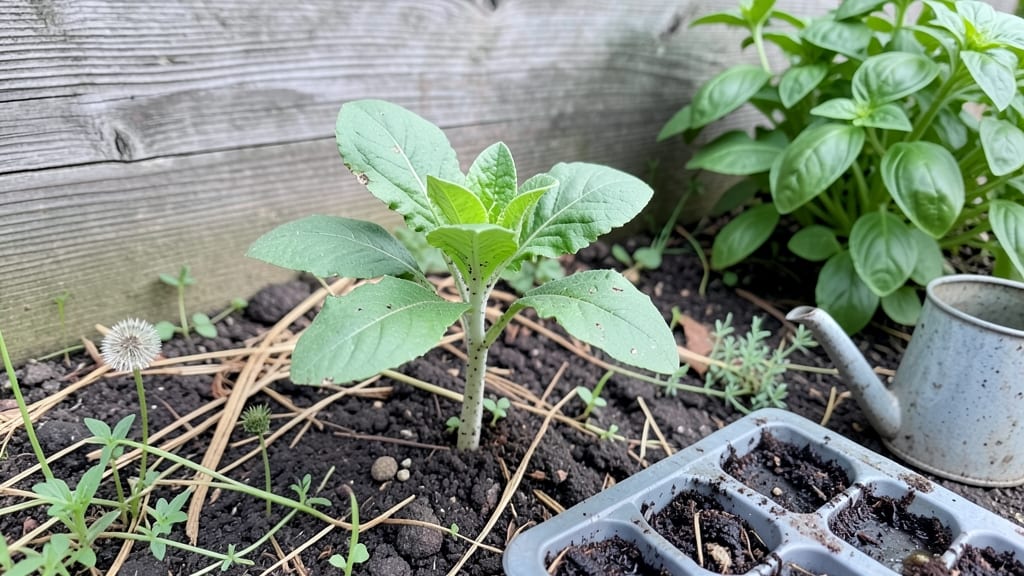
A seedling represents the first critical phase of a plant's life cycle after sprouting from a seed. 🌱 This fragile stage is where the plant establishes its foundational structures—cotyledons (seed leaves), a delicate stem, and early root development.
Think of it as nature's way of building a strong base before the plant grows taller and more robust. What sets seedlings apart is their vulnerability; they need consistent care to avoid issues like overwatering or insufficient light, which can stunt growth or even kill the plant before it matures.
Understanding this stage helps gardeners and plant enthusiasts provide the right conditions—whether that's using seedling trays with drainage or ensuring gentle watering to keep the soil moist without drowning the roots.
The transition from seed to seedling is where most plants either thrive or fail, making it the most important phase for long-term success.
💡 In This Article
- Seedling Development Stages and Key Growth Signs
- Caring for Seedlings: Essential Tips for Healthy Growth
Seedling development stages and key growth signs
The journey from seed to seedling begins with the radicle, the first part to emerge during germination. This tiny root anchors itself into the soil, seeking moisture and nutrients while establishing the plant's foundation.
Within 3-7 days (depending on species and conditions), the radicle grows downward at a rate of about 1-2 millimeters per hour, creating a network of fine root hairs that absorb water and minerals. 🌱 The radicle's development is particularly sensitive to soil temperature—ideal ranges are 60-75°F for most plants, while cooler temperatures slow growth, and extremes can halt it entirely.
Once the radicle is established, the next critical phase involves the hypocotyl, the stem that pushes upward through the soil, carrying the cotyledons—the seedling's first leaves. These cotyledons, often called "seed leaves," aren't true leaves but serve as temporary energy storage and photosynthesis sites.
For example, in bean seedlings, the cotyledons are thick and fleshy, while in monocots like grass, they appear as a single sheath. Light triggers this upward growth, with seedlings bending toward light sources—a behavior called phototropism—which ensures they reach the surface within 5-10 days.
The final stage introduces the true leaves, which differ from cotyledons in structure and function. These leaves, often smaller and more delicate, begin photosynthesizing efficiently, allowing the seedling to produce its own energy.
At this point, the seedling's stem elongates rapidly, but this growth is highly dependent on humidity levels. Low humidity can cause the stem to become leggy (overly stretched), while high humidity promotes sturdy, compact growth.
For instance, tomato seedlings grown under 60% humidity may develop weak stems, whereas those in 70-80% humidity grow stronger and more resilient.
Environmental factors don't just influence growth—they determine survival. Temperature fluctuations can stress seedlings, causing them to wilt or develop chlorosis (yellowing leaves) if too cold or scorching if overheated.
Light quality matters too: seedlings thrive under 12-16 hours of daylight, but artificial grow lights emitting blue and red spectrums can compensate for shorter natural light periods.
The interplay of these factors is why greenhouse growers meticulously control conditions, often using heat mats (70-75°F) for soil warmth and ventilation systems to maintain optimal humidity.
Here's what's actually happening at a cellular level: The seed's stored energy (from endosperm or cotyledons) fuels initial growth, but once true leaves emerge, the seedling shifts to autotrophy—producing its own food via photosynthesis.
This transition marks the end of the seedling stage and the beginning of the juvenile phase, where the plant focuses on root and shoot expansion.
Understanding these stages helps gardeners intervene at the right time, such as thinning seedlings to reduce competition for nutrients or providing support for leggy stems before they become too weak.