
Planting
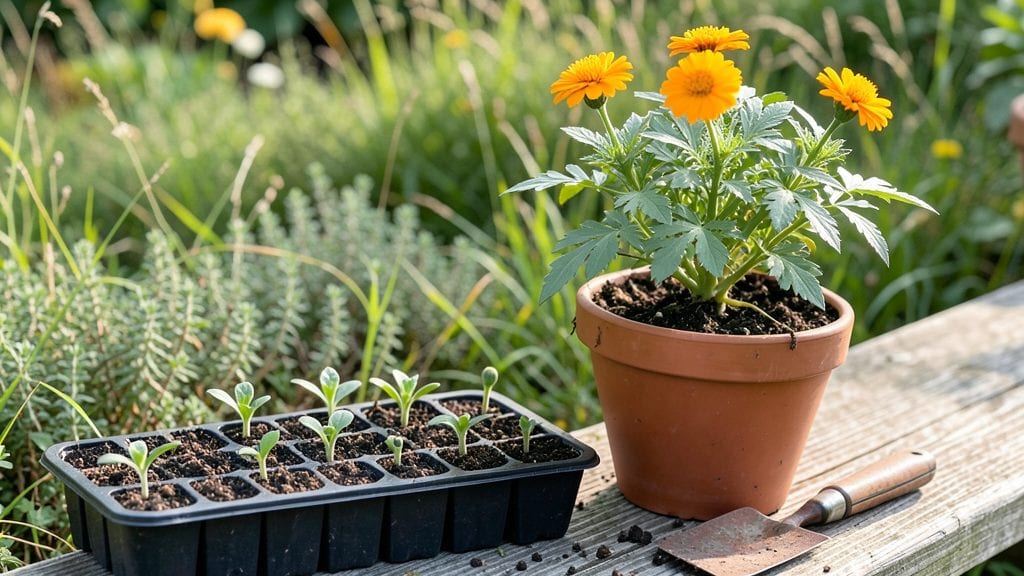
Fast blooms start with calendula seeds sown at the right time—spring or late summer for direct sowing, when soil warms to 60°F and stays reliably above 50°F. I learned the hard way that rushing seeds in cold soil means waiting months for flowers instead of weeks.
The secret isn’t complicated: patience in timing pays off with vibrant orange and yellow blooms by early summer.
You’ll need just three things—well-draining soil, a sunny spot, and a shallow tray or direct planting area. Calendula thrives in average garden soil but hates soggy roots, so mix in compost or sand if your soil feels heavy.
For fastest results, sow seeds ¼-inch deep, spacing them 12 inches apart—they’ll self-sow like crazy if you let them. A sunny windowsill works for indoor starts, but direct sowing skips transplant shock entirely.
Within 10-14 days, you’ll see those first true leaves—tiny, round, and bright green. Keep soil moist (not wet) and watch as they grow into 3-foot-tall plants bursting with petals by midseason.
The flowers attract pollinators, repel pests, and make stunning edible garnishes. Here’s where it gets interesting—calendula’s medicinal properties mean you’re growing beauty and healing power.
Here’s the plot twist: overcrowding kills blooms. Thin seedlings to 18 inches apart once they’re 2-3 inches tall, or you’ll end up with lush foliage but few flowers. And if slugs show up (they will), a beer trap or diatomaceous earth saves the day.
This method works for container gardens, raised beds, or full sun patches—just adjust spacing for smaller pots.
📚 In This Guide
- What you need
- Instructions
- Tips and common mistakes
- Wrapping up and next steps
What you need
- ● Calendula seeds: 1 packet (50–100 seeds, non-GMO preferred for best results).
- ● Well-draining potting mix: 1–2 bags (sterilized, seed-starting mix or garden soil amended with compost).
- ● Containers or garden bed: For seedlings: 2–4 small pots (3–4 inches deep) or a seed tray with cell inserts.
- ● For direct sowing: A sunny garden spot (6+ hours of light) with loose, fertile soil.
- ● Watering can or spray bottle: With a fine mist nozzle for gentle hydration.
- ● Plant labels: 5–10 labels (to track planting dates and varieties).
- ○ Seedling heat mat: (Optional) To speed up germination in cooler climates.
- ○ Grow lights: (Optional) If starting indoors with limited sunlight.
- ● Fertilizer: Balanced organic fertilizer (e.g., 10-10-10) or compost tea for post-germination boost.
- ○ Row cover or cloche: (Optional) To protect seedlings from pests or chilly nights.
- ○ Gloves: (Optional) For messy soil work or handling prickly seed packets.
Step-by-Step instructions for sowing calendula seeds directly in the garden
Skip the indoor hassle—calendulas thrive when planted straight into warm soil for quick, vibrant blooms.
Choose the Right Time and Location
Calendulas love warmth and perform best when sown after the last frost date, when soil temperatures reach at least 60°F. They tolerate light frosts but won’t germinate in cold soil. I always wait until nighttime temperatures stay above 50°F—this ensures strong, consistent germination within 7-14 days.
Select a sunny spot with full sun to partial shade—calendulas appreciate 6+ hours of direct sunlight daily for the boldest blooms. If your summers are scorching, provide afternoon shade to prevent wilting. The key is well-draining soil; calendulas hate soggy roots, so avoid low-lying areas where water pools.
Prepare the Soil and Sow Seeds
Loosen the top 6 inches of soil with a garden fork or tiller to create a loose, crumbly bed. Calendulas don’t need rich soil but benefit from a light mix of compost worked into the top 2 inches. Scatter seeds ¼ inch deep, spacing them 12 inches apart for single plants or 18 inches apart if you want larger, bushier blooms.
I like to use a seed spacing grid (a simple DIY with sticks and string) to keep rows straight. Sowing too close leads to weak stems and crowded flowers. Once planted, lightly cover the seeds with soil and pat gently—don’t press too hard, or you’ll compact the mix and slow germination.
Water Gently and Maintain Moisture
Water the area lightly but thoroughly right after sowing to settle the soil around the seeds. Use a fine mist setting on your hose or watering can—calendula seeds need consistent moisture to germinate, but they’ll rot if the soil stays soggy. Aim for 1 inch of water per week, splitting it into two waterings (morning and evening) to prevent evaporation.
After germination, reduce watering slightly—calendulas are drought-tolerant once established. Let the top 1 inch of soil dry out between waterings, but never to the point of wilting. You’ll know you’re doing it right when seedlings appear in 7-14 days with round, lobed cotyledons (their first true leaves).
Thin Seedlings and Encourage Bushy Growth
When seedlings reach 2 inches tall, thin them to your planned spacing (12-18 inches apart). Use sharp scissors to snip unwanted plants at soil level—this prevents disturbing roots and reduces transplant shock. I always keep the strongest, most vigorous seedlings, discarding the rest to avoid competition.
Pinch back the top set of leaves when plants are 4-6 inches tall to encourage bushier growth. This simple step prevents leggy stems and promotes more blooms. Fertilize lightly with a balanced, water-soluble fertilizer (like 10-10-10) diluted to half strength 4-6 weeks after germination—calendulas don’t need heavy feeding but appreciate a gentle boost.
Harvest and Maintain for Continuous Blooms
Start harvesting petals when flowers are fully open but before they fade—this encourages more blooms. Snip individual petals with clean scissors or pinch them off by hand. For cut flowers, harvest stems in the early morning when moisture is highest and arrange them in lukewarm water to extend their vase life.
Deadhead spent blooms regularly to prevent seed formation and redirect energy into new flowers. I also mulch around plants with 2 inches of straw or shredded leaves to retain moisture and suppress weeds. With proper care, calendulas will bloom nonstop from early summer until frost, providing color and pollinator support all season.
Tips & tricks for perfect calendula germination
Fast blooms start with these precise steps—calendulas reward patience with vibrant color and resilience. Here’s how to ensure every seed becomes a thriving plant.
Soil Temperature is Non-Negotiable: The 60°F minimum soil temperature in Step 1 isn’t just a suggestion—it’s the threshold where calendula seeds finally decide to germinate. Use a soil thermometer to confirm warmth, especially in cooler climates. I’ve seen seeds sit for weeks in 55°F soil before finally sprouting, while they emerge within days at 65°F. If your soil runs cold, consider using black plastic mulch to warm it up 2-3 weeks before planting.
Precision in Spacing Pays Off: That ¼-inch depth for seeds in Step 2 might seem shallow, but it’s critical—they need light to trigger germination. Pressing them too deep or covering with compacted soil will leave you waiting weeks for sprouts. For even spacing, I use a simple DIY grid made from sticks and string, which keeps rows straight and prevents overcrowding. Trust me, the 12-inch spacing between plants will give you stronger stems and more abundant blooms than crammed seedlings.
Watering Wisdom for Germination: The 1 inch of water per week guideline in Step 3 is your golden rule—too little and seeds dry out, too much and they rot. I’ve found that using a fine mist setting on my watering can gives the most consistent results. Water in the morning so excess moisture evaporates by evening, reducing the risk of fungal issues. Once those first round, lobed cotyledons appear (usually within 7-14 days), you can ease up slightly and let the top inch of soil dry between waterings.
Thinning Technique Matters: When those seedlings hit 2 inches tall in Step 4, resist the urge to pull weeds—focus on thinning. Use sharp scissors to snip at soil level rather than tugging, which disturbs roots of remaining plants. I always keep the most vigorous seedlings, discarding the rest immediately. This prevents competition and gives your chosen plants room to grow into those 18-inch bushy beauties you’re aiming for.
Pro Tips for Sowing Calendula Seeds
- Fast blooms start with these precise steps—calendulas reward patience with vibrant color and resilience.
- Soil Temperature is Non-Negotiable: The 60°F minimum soil temperature in Step 1 isn’t just a suggestion—it’s the threshold where calendula seeds finally decide to germinate.
- Precision in Spacing Pays Off: That ¼-inch depth for seeds in Step 2 might seem shallow, but it’s critical—they need light to trigger germination.
Frequently asked questions
Got questions about sowing calendula seeds? You’re not alone!
Here are answers to the most common queries to help you grow vibrant blooms with confidence.
When is the best time to sow calendula seeds?
Calendula thrives in cool to warm weather—sow seeds 2–4 weeks before your last frost date for spring blooms, or late summer (8–10 weeks before frost) for fall color. In mild climates, you can even sow year-round! Just avoid extreme heat (above 85°F), which can delay germination.
Do calendula seeds need light to germinate?
Nope! Calendula seeds germinate best in darkness—cover them lightly with ¼-inch soil (or a damp paper towel) to encourage sprouting. Once they’ve popped up (usually in 7–14 days), thin seedlings to 12–18 inches apart for optimal airflow and blooms.
Why aren’t my calendula seeds sprouting?
Common culprits include:
- Cold soil: Keep soil consistently 60–75°F for germination.
- Poor moisture: Keep soil evenly damp (not soggy) until sprouts appear.
- Old seeds: Calendula seeds lose viability after 1–2 years—test a few in a damp paper towel first!
- Depth issues: Plant seeds too deep? They may rot—stick to ¼-inch max.
Can I grow calendula indoors or in containers?
Calendula adapts well to containers (5+ inches deep) and even windowsill gardens. Use a well-draining potting mix and place pots in full sun (6+ hours/day). Just avoid overcrowding—space plants 12 inches apart for bushy growth.
Are there fast-growing calendula varieties for quick blooms?
Yes! For rapid color, try:
- ‘Pacifica Series’: Germinates in 7–10 days and blooms in 6–8 weeks.
- ‘Touch of Class’: Compact and disease-resistant, with blooms in 7–9 weeks.
- ‘Moonbeam’: Pale yellow variety that thrives in partial shade.
Pro tip: Soak seeds overnight in warm water to jumpstart germination by 24–48 hours!
Wrapping up and next steps
Sowing calendula seeds is a rewarding journey that brings vibrant blooms to your garden with minimal fuss! 🌸 Whether you’re a seasoned gardener or just starting out, these cheerful flowers thrive with direct sowing—no fuss, just fast and beautiful results.
Now that you’re armed with the right tips, grab your seeds, head outdoors, and let nature do the rest! Ready to watch your garden transform? Start planting today—your future blooms will thank you!
Next step:
- 📅 Mark your calendar for your first sowing date (early spring or late summer for best results).
- 🌱 Check your soil and prep your garden bed or containers before you begin.
- 💬 Share your progress—tag us in your garden pics for a little extra motivation!