Planting
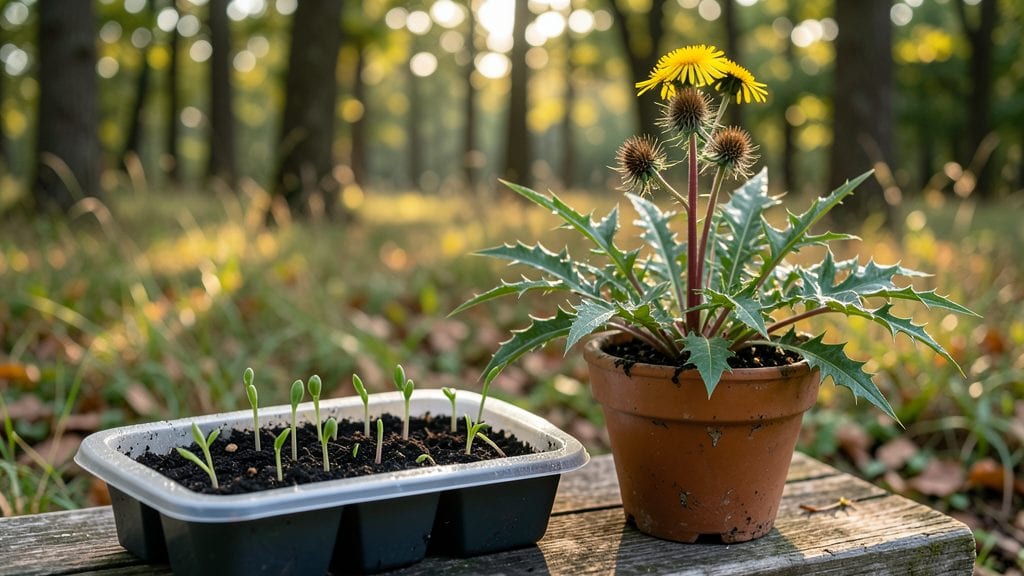
Sowing thistle seeds is like planting a hardy little rebel that thrives where other plants give up. 🌱 I’ve watched these tough perennials push through rocky soil and still bloom like they’re in a five-star garden—no fuss, no pampering.
The secret lies in their resilience, but even they need the right start to show off their striking purple blooms year after year.
You’ll only need a few supplies: seeds (available from wildflower suppliers or saved from mature plants), a fork or trowel, and a sunny spot where other plants refuse to grow. Thistles handle poor soil, drought, and even partial shade, but they’ll reward you best with full sun and well-drained ground.
Plant them in early spring or fall, just scratch the seeds into the soil—no need for deep planting.
The first sprouts appear within 2-3 weeks, and by summer, you’ll have a mix of spiky greens and those iconic lavender flowers that hummingbirds adore. They spread easily, so give them space if you want a controlled patch, or let them naturalize for a wildflower meadow vibe.
Once established, they’ll come back stronger every year.
Perfect for cottage gardens, pollinator-friendly spaces, or even as a low-maintenance border. Just avoid overwatering—they’re drought-tolerant once rooted—and say goodbye to weeding. These plants are basically the "set it and forget it" stars of the garden.
📚 In This Guide
- What you need
- Instructions
- Tips and common mistakes
- Wrapping up and next steps
What you need
- ● Sow thistle seeds: 1–2 grams (about 500–1,000 seeds) for a small patch. Buy organic or heirloom seeds if possible!
- ● Seed-starting soil or potting mix: 1–2 gallons (for direct sowing or starter pots). Use a well-draining, organic blend.
- ● Garden bed or containers: For direct sowing: A sunny spot with poor to average soil (sow thistle thrives in less fertile ground!)
- ● For container growing: 5–10 inch pots with drainage holes (2–3 plants per container).
- ● Watering can or hose: With a gentle spray nozzle for even moisture.
- ○ Garden gloves (optional but recommended): To protect your hands from prickly leaves.
- ● Garden trowel or small shovel: For digging shallow furrows (½ inch deep).
- ○ Compost or aged manure (optional): A handful mixed into soil can boost growth, though sow thistle doesn’t need it!
- ● Row cover or shade cloth (early stages): To protect seedlings from harsh sun or pests.
- ● Pruning shears: For harvesting leaves or managing growth.
- ● Label markers: To track planting dates if testing varieties.
How to grow thistle from seed in challenging conditions
This hardy perennial thrives where others fail—here's how to get it growing strong.
🌱 Step 1: Prepare the Seedbed or Containers
Thistle seeds need minimal soil prep—they'll grow in poor conditions, but they perform best in loose, well-draining soil. If sowing directly outdoors, choose a spot with full sun to partial shade and rake the surface lightly to break up any compacted topsoil. You don't need to amend the soil, but removing rocks or debris ensures good seed-to-soil contact.
For container growing, fill a 6-inch deep pot with standard potting mix—thistle tolerates most mixes but won't thrive in heavy clay. Press the soil down gently to create a firm seedbed. The key here is keeping the surface loose enough for the tiny seeds to make contact without being buried too deep.
🌱 Step 2: Scatter and Lightly Cover the Seeds
Thistle seeds are tiny and lightweight, so I use a simple scattering method: hold the packet close to the soil and tap it gently with my thumb to release seeds evenly. Aim for about 10-15 seeds per square foot—they germinate easily, and thinning later prevents overcrowding. Don't worry about spacing perfectly at this stage.
Cover the seeds with a thin layer of soil no deeper than ¼ inch. A light dusting is all they need—burying them too deep delays germination. I use a fine-mesh sieve to distribute the soil evenly without creating clumps. Water the area gently with a spray bottle until the soil feels uniformly moist but not soggy.
☀️ Step 3: Provide Moisture and Wait for Germination
Keep the soil consistently moist but never waterlogged—thistle seeds rot if they sit in damp conditions too long. I check daily by pressing my finger into the soil: if the top ½ inch feels dry, it's time to water again. A drip irrigation system or soaker hose works best to avoid disturbing the seeds.
Germination typically takes 14-30 days, depending on temperature. In cooler weather, it may take longer, but don't rush—thistle seeds are cold-hardy and will sprout when conditions are right. Once you see the first tiny green shoots, reduce watering slightly but keep the soil from drying out completely.
🌿 Step 4: Thin Seedlings and Encourage Strong Growth
When seedlings reach about 2 inches tall, it's time to thin them to 6-8 inches apart. Use small scissors or your fingers to snip unwanted seedlings at the base—pulling can disturb the roots of nearby plants. This step prevents competition and gives your thistle room to develop strong stems and foliage.
Thistle is drought-tolerant once established, but young plants benefit from 1 inch of water per week during their first growing season. You'll notice healthy plants developing deep green leaves and sturdy stems. If you're growing thistle for ornamental purposes, you can leave it to grow wild, but for culinary or medicinal use, regular thinning ensures the best quality.
✂️ Step 5: Maintain and Harvest as Needed
Thistle requires minimal maintenance after the first season. In subsequent years, it self-seeds prolifically, so you may not need to replant. If you want to control spread, deadhead spent flower stalks in late summer to prevent seed formation. The plant's deep roots make it highly resilient—it thrives even in dry spells once established.
For harvesting, cut stems at the base when they reach 12-18 inches tall. You can use the leaves and stems fresh or dry them for later use. Thistle's hardiness means you'll have multiple harvests throughout the growing season, making it a low-maintenance perennial for any gardener.
Tips & tricks for perfect thistle growth in challenging conditions
Thistle might be tough, but these little tricks will help you coax the best growth from those tiny seeds—especially when conditions aren't ideal.
Soil Prep Secret: While thistle thrives in poor soil, the 6-inch deep pot or garden bed should still have some texture. If your native soil is heavy clay, mix in a handful of coarse sand or perlite to improve drainage. This prevents waterlogging, which is thistle's biggest enemy during germination. I like to press the soil gently after filling containers—it creates just enough firmness for those lightweight seeds to make proper contact without sinking too deep.
Seed Scattering Strategy: Those 10-15 seeds per square foot might seem sparse, but trust me—thistle grows fast and thick. For even distribution, I use a simple trick: place the seed packet on a flat surface, hold it close to the soil, and tap it gently with my thumb. This creates a fine, even rain of seeds without wasting any. If you're worried about spacing, just remember you'll thin later when seedlings reach 2 inches tall.
Germination Timing: The 14-30 day germination window can feel like forever, especially when you're checking daily. Here's the thing: thistle seeds are cold-hardy, so they'll wait for perfect conditions. If you're in cooler weather, don't rush—just keep that soil consistently moist (but never soggy) by checking the top ½ inch daily. A clear plastic dome or humidity tent can speed things up by 3-5 days if you're impatient!
Thinning Technique: When those seedlings hit 2 inches, thinning to 6-8 inches apart might feel cruel, but it's worth it. I use small scissors to snip at the base rather than pulling—this prevents disturbing the roots of your keepers. For large batches, consider thinning in stages: first to 4 inches apart, then again after another week to reach the final spacing. This gives you more harvestable plants while still preventing competition.
Pro Tips for Sow Thistle Seeds
- Thistle might be tough, but these little tricks will help you coax the best growth from those tiny seeds—especially when conditions aren't ideal.
- Soil Prep Secret: While thistle thrives in poor soil, the 6-inch deep pot or garden bed should still have some texture.
- Seed Scattering Strategy: Those 10-15 seeds per square foot might seem sparse, but trust me—thistle grows fast and thick.
Frequently asked questions
Got questions about sowing thistle seeds?
Here are some of the most common ones—and their answers—to help you get started with confidence!
When is the best time to plant sow thistle seeds?
Sow thistle thrives in cool seasons, so plant seeds in early spring (March–April) or late summer/early fall (August–September). Avoid sowing in hot summer months—seeds may struggle to germinate in scorching heat. If you're in a mild climate, fall planting is ideal for establishing roots before winter.
How long does it take for sow thistle seeds to germinate?
Germination usually takes 10–21 days, depending on soil temperature and moisture. Keep the soil consistently moist (but not soggy) and in partial shade until sprouts appear. Pro tip: A light layer of mulch (like straw) helps retain moisture and speeds up germination!
Can I grow sow thistle in containers or small spaces?
Sow thistle adapts well to containers, raised beds, or small gardens—it’s a compact perennial. Use a 5–6 inch deep pot with well-draining soil. Just ensure it gets at least 4–6 hours of sunlight daily and water moderately. Bonus: It’s a great choice for pollinators!
Are sow thistle seeds deer- or rabbit-resistant?
While not completely deer/rabbit-proof, sow thistle is less appealing than many other perennials due to its mildly bitter leaves. To deter pests, try:
- Planting near deer-resistant companions (e.g., lavender, rosemary).
- Using physical barriers (like chicken wire) for young seedlings.
- Applying organic repellents (e.g., garlic spray) if needed.
What can I do if my sow thistle seeds aren’t sprouting?
If seeds aren’t germinating after 3–4 weeks, try these fixes:
- Check soil temperature: Ideal range is 50–70°F. Use a seedling heat mat if soil is too cold.
- Test moisture levels: Dry soil? Water gently but thoroughly, then keep evenly moist.
- Verify seed viability: Test a few seeds in a damp paper towel—if none sprout in 7–10 days, they may be old.
- Consider scarification: Nick the seed coat lightly with sandpaper to help water penetrate.
Are there alternatives to sow thistle for poor soil?
If sow thistle isn’t your style, try these low-maintenance, drought-tolerant perennials for tough soil:
- Yarrow (Achillea) – Thrives in poor soil, attracts pollinators.
- Russian Sage (Perovskia) – Drought-resistant, silvery foliage.
- Lamb’s Ear (Stachys byzantina) – Soft, fuzzy leaves, great for ground cover.
- Sedum (Stonecrop) – Succulent-like, handles neglect beautifully.
Wrapping up and next steps
Growing sow thistle seeds is a rewarding way to add a resilient, edible perennial to your garden—even in challenging conditions! 🌱 These hardy plants thrive in poor soil, require minimal care, and offer both culinary and ecological benefits.
Whether you’re a seasoned gardener or just starting, sow thistle is a fantastic choice for sustainability and self-sufficiency.
Now that you’re equipped with the how-to and answers to common questions, it’s time to take action! Clear a small patch of soil, scatter those seeds, and watch nature do the rest. Happy planting—your future harvest (and pollinators!) will thank you. 🌿