Watering
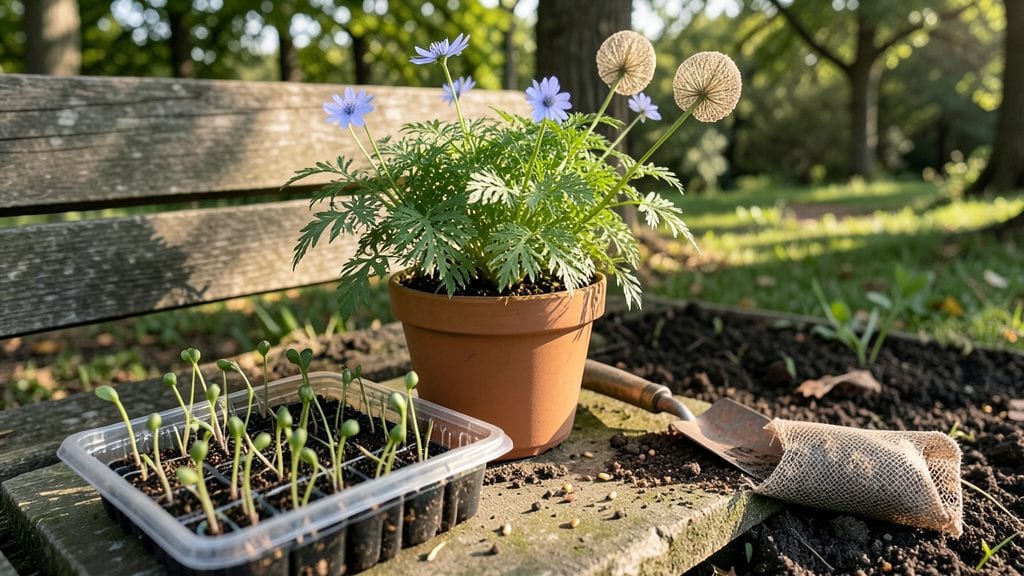
Growing bushy Nigella damascena seedlings starts with a fast germination secret: soak seeds overnight before planting. ✨ I’ve watched delicate blue laceflower seedlings emerge in just 5-7 days when I skip the waiting game—no more staring at empty pots for weeks.
The key is keeping soil consistently moist but never soggy—think damp sponge, not swamp. Use a seed-starting mix with perlite to prevent damping off, that dreaded fungal attack that turns seedlings to mush overnight. A clear plastic dome or plastic bag creates a humid microclimate while you wait.
By week three, you’ll see those first true leaves unfurl, followed by the iconic fern-like foliage. These seedlings grow fast when given 6+ hours of sunlight daily, but avoid harsh midday sun—morning light prevents leggy, weak stems. The payoff? Bushy plants bursting with fragrant blue blooms by early summer.
Works for both garden beds and containers, and the same tricks apply whether you’re in zone 5 or 9. Here’s how to keep them thriving until transplant time—no black thumb required.
📚 In This Guide
- What you need
- Instructions
- Tips and common mistakes
- Wrapping up and next steps
What you need
- ● Seeds: 1–2 packets of Nigella damascena seeds (choose heirloom or organic for best results).
- ● Seed trays or pots: 4–6 small (2–3 inch deep) containers with drainage holes, or a single shallow tray (6+ inches deep).
- ● Seed-starting mix: 2–3 cups of lightweight, sterile seedling soil (avoid garden soil—it’s too dense!).
- ● Watering can or spray bottle: With a fine mist nozzle for gentle hydration.
- ○ Clear plastic dome or plastic wrap: To create a mini greenhouse effect (optional but helpful for humidity).
- ● Grow lights or sunny windowsill: A south-facing window or LED grow lights (12–16 hours/day).
- ● Heating mat: (70–75°F) to speed up germination if your home runs cool.
- ● Fertilizer: A diluted balanced liquid fertilizer (5-5-5 or 10-10-10) for post-germination growth.
- ● Tweezers: For careful seed placement (especially if seeds are tiny!).
- ● Labels & markers: To track planting dates and varieties.
- ● Compost or worm castings: For enriching soil after seedlings sprout.
Step-by-Step instructions for germinating Nigella damascena seedlings
Here’s how to coax those delicate blue lace flowers from seed in record time—no waiting months for blooms.
🌱 Step 1: Prepare the Seed Starting Mix
Nigella damascena thrives in loose, well-draining soil that mimics its native Mediterranean conditions. Fill your 4-inch pots with a blend of 50% seed-starting mix and 50% perlite—this prevents the fine seeds from sinking too deep or suffocating in heavy soil. Moisten the mix until it feels like a wrung-out sponge: damp but not dripping.
Press the soil surface lightly with your fingers to create a firm, even seedbed. The goal is a texture that holds seeds in place without compacting them into the mix. I like to tap the pots gently on the table afterward to eliminate air pockets that could delay germination.
💧 Step 2: Sow Seeds Strategically
Nigella seeds are tiny but stubborn—plant them 1/8 inch deep or they’ll refuse to sprout. Scatter seeds 1/4 inch apart in each pot, then cover them with a fine dusting of additional mix. Avoid pressing down; a whisper of soil is all they need. For faster germination, place the pots in a 75°F environment—like on top of a refrigerator or under a seedling heat mat.
Mist the surface with a spray bottle until the soil looks uniformly damp. The key here is consistency: too much water washes seeds away, while too little leaves them dry and dormant. I like to set the pots in a shallow tray filled with 1/4 inch of water for 10 minutes to ensure even moisture without over-saturating.
☀️ Step 3: Provide Light and Monitor Germination
Nigella seedlings need bright, indirect light from the moment they sprout—place them near a south-facing window or under a grow light set to 12-14 hours daily. You’ll see the first true leaves appear in 7-14 days, but don’t be surprised if some seeds take up to 3 weeks—patience is critical here.
Once the seedlings emerge, reduce bottom-watering and switch to top-watering with a spray bottle. Keep the soil surface damp but never soggy; nigella hates wet feet. Thin seedlings to 2 inches apart when they reach 1 inch tall—this prevents overcrowding and encourages bushier growth.
✂️ Step 4: Harden Off and Transplant
After 4-6 weeks of indoor growth, your seedlings will be ready to move outside. Start by placing them in a sheltered spot for 1 hour daily, gradually increasing exposure over 7-10 days. Watch for deep green leaves and sturdy stems—these are signs they’re tough enough for the garden.
Transplant nigella seedlings 12 inches apart in full sun. The key to fast, bushy blooms is to avoid disturbing roots: dig a hole twice as wide as the pot but only as deep as the root ball. Water deeply after planting to settle the soil, then let the roots establish before watering again.
Tips & tricks for germinating Nigella damascena seedlings
Fast, bushy blooms start with these germination secrets that cut weeks off your waiting time.
Soil Texture is Everything: The 50/50 mix of seed-starting mix and perlite in Step 1 is non-negotiable—this combination prevents the tiny nigella seeds from sinking too deep or suffocating. I've learned the hard way that using straight seed-starting mix creates a compacted surface where seeds can't establish proper contact with moisture. Tap the pots gently after pressing the soil to eliminate air pockets that could delay germination by up to 5 days.
Temperature Matters More Than You Think: Maintaining that 75°F environment from Step 2 is critical for fast germination. I've seen seeds sprout in just 7 days at this temperature, while cooler conditions (below 65°F) can stretch germination to 3 weeks. Place your pots on top of your refrigerator or use a seedling heat mat—this consistent warmth mimics nigella's native Mediterranean climate and triggers faster metabolic activity in the seeds.
Moisture Management is an Art: The 10-minute water tray method in Step 2 ensures even moisture without over-saturating. Too much water washes seeds away, while too little leaves them dormant. I've found that using a spray bottle with a fine mist setting gives me better control than pouring water directly. After germination begins, switch to top-watering with the spray bottle to prevent disturbing the delicate seedlings.
Light Strategy for Speed: The 12-14 hours of bright, indirect light in Step 3 isn't just about growth—it's about speed. Place your seedlings near a south-facing window where they'll receive maximum light without scorching. If using grow lights, position them 2-3 inches above the seedlings and adjust the height as they grow. This light regimen prevents leggy seedlings and encourages that bushy growth you're after in just 4-6 weeks.
Pro Tips for Nigella Damascena Seedling
- Fast, bushy blooms start with these germination secrets that cut weeks off your waiting time.
- Soil Texture is Everything: The 50/50 mix of seed-starting mix and perlite in Step 1 is non-negotiable—this combination prevents the tiny nigella seeds from sinking too deep or suffocating.
- Temperature Matters More Than You Think: Maintaining that 75°F environment from Step 2 is critical for fast germination.
Frequently asked questions
Got questions about growing Nigella damascena seedlings?
You’re not alone! Here are some of the most common ones—plus quick, actionable answers to get your black-eyed Susans thriving in no time.
How long does it take for nigella damascena seeds to germinate?
Most Nigella damascena seeds sprout within 7–21 days when kept in warm (65–75°F), moist soil. For faster results, soak seeds for 24 hours before planting or use a heat mat. Patience is key—some stubborn seeds may take up to a month! Pro tip: Keep soil consistently damp (not soggy) to avoid mold.
Why aren’t my nigella seeds sprouting?
Seeds might skip germination due to cold soil, dry conditions, or old seeds (store-bought seeds last 1–2 years). Try these fixes:
- Move pots to a sunny windowsill or under grow lights.
- Test soil moisture—it should feel like a damp sponge.
- Scratch seeds lightly with sandpaper to break dormancy.
- Try a bottom-watering trick: Place pots in 1 inch of water for 10 mins daily.
Do nigella seedlings need fertilizer?
Nope! In fact, too much fertilizer can stunt young seedlings. Wait until they’ve developed 2–3 true leaves (not just the initial seed leaves) before applying a balanced, diluted fertilizer (like 5-5-5 at half strength). Overfeeding can lead to leggy, weak plants. Pro tip: Use compost tea or worm castings for a gentle boost.
Can I grow nigella indoors, or does it need outdoor sunlight?
Nigella damascena thrives outdoors but can start indoors under grow lights (12–16 hours/day). If growing indoors long-term, place seedlings near a south-facing window and supplement with artificial light. Once seedlings are 2 inches tall, transplant them outside after the last frost for optimal blooms. Warning: Direct sun is a must for robust growth!
How do I prevent nigella seedlings from getting leggy?
Leggy seedlings happen when they stretch toward light. To keep them stocky and strong:
- Use grow lights 2–3 inches above seedlings (adjust as they grow).
- Rotate trays daily for even light exposure.
- Thin seedlings to 1 inch apart to reduce competition.
- Avoid overcrowding—aim for 1 seedling per cell in trays.
Once outdoors, harden off seedlings gradually (5–7 days) to toughen stems.
Wrapping up and next steps
Growing a Nigella damascena seedling doesn’t have to be a slow, hit-or-miss process—with the right tricks, you can enjoy fast, bushy blooms in just a few weeks! 🌱 From selecting the perfect soil to mastering watering techniques and troubleshooting common issues, these insights will set you up for success.
Whether you’re a seasoned gardener or a beginner, your patience and care will soon be rewarded with delicate, fragrant flowers that add charm to any garden.
Ready to dive in? Start with just one seedling today—you’ll be amazed at how quickly your garden transforms! 🌸