Flowers
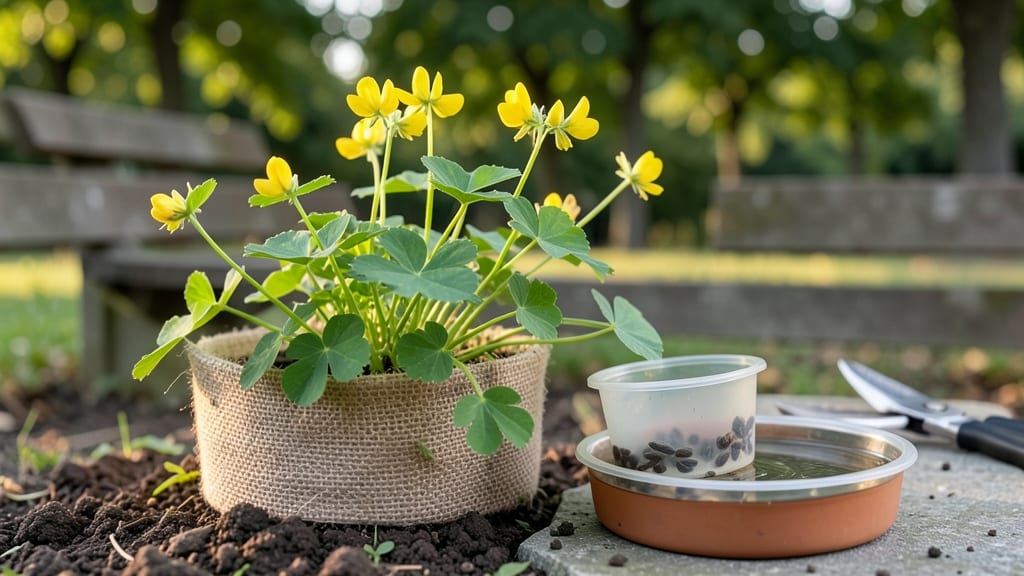
Seeds that float during a water test are typically nonviable or dead, as they lack the density and moisture absorption needed for germination. Most viable seeds sink within 10–15 seconds, while hollow or damaged seeds remain afloat.
This simple water test works because healthy seeds contain stored moisture and dense internal structures that pull them downward. 🌱 When seeds stay afloat, it usually means they're either empty shells or too dry to absorb water—key indicators they won't sprout.
I've found this method particularly reliable for larger seeds like beans or peas, though some delicate varieties may need special handling.
For gardeners, the float test is a quick way to sort through seed batches before planting. Just fill a bowl with room-temperature water, drop in your seeds, and wait 10–15 seconds—any that stay up are best discarded.
This saves time and resources compared to planting everything and waiting for results.
💡 In This Article
- How the Float Test Reveals Seed Viability
- Practical Germination Test for Gardeners
How the float test reveals seed viability
The float test works because viable seeds contain moisture and dense internal structures that create downward buoyancy. When submerged, healthy seeds absorb water through their seed coat, causing them to swell slightly and become denser than water (which has a density of 1 gram per cubic centimeter).
This swelling process typically occurs within 5-10 seconds, pulling the seed downward. 🌱 The key factor is the seed's internal moisture content—viable seeds often contain 10-20% moisture by weight, while dead or hollow seeds have lost this moisture and remain buoyant.
Here's what's happening at the cellular level: Viable seeds have intact embryos with living cells that actively pump water inward through osmosis. The embryo's dense cytoplasm and stored starches (like amyloplasts) create enough downward force to overcome water's surface tension.
In contrast, hollow or damaged seeds lack these internal structures—think of them like empty plastic balls versus solid metal ones. Even seeds that appear intact externally may have internal cavities from pests or improper storage, making them float despite looking good. 💫
This test differs from other germination methods like the paper towel test because it doesn't require waiting days to see sprouts. The paper towel method relies on visible root emergence (usually 3-7 days), while the float test gives immediate results.
Cold stratification (pre-chilling seeds to break dormancy) also can't predict viability—it only helps seeds that are alive but dormant. For example, tomato seeds might float but still germinate when stratified, while sunflower seeds that float are almost certainly dead.
The float test's strength lies in its speed and ability to identify completely nonviable seeds.
There are exceptions to consider: Some seeds naturally float due to their lightweight husks (like certain varieties of poppy seeds) or waxy coatings. In these cases, the float test isn't reliable, and gardeners should use the paper towel method instead.
The test also works best with larger seeds—tiny seeds like chives may not be heavy enough to sink even when viable. For these delicate seeds, the paper towel method with 100% humidity and 70-75°F temperatures provides more accurate results. 🔥
What most people don't realize is that the float test can reveal more than just viability—it can indicate storage conditions. Seeds that float often show signs of desiccation or insect damage when examined closely.
For instance, bean seeds that float typically have hollow centers where weevils have eaten the embryo, while others may show cracks in their seed coats from drying out. This makes the float test particularly valuable for gardeners dealing with seed batches of unknown age or storage history.
The science behind buoyancy involves Archimedes' principle: an object will float if it displaces a volume of water equal to its own weight. Viable seeds displace 1.1-1.3 grams per cubic centimeter of water due to their density, while hollow seeds displace only 0.8-0.9 grams per cubic centimeter.
This difference is why the test works—it's essentially a density sorting mechanism that nature uses during water dispersal for many plant species. 💛