
Trees
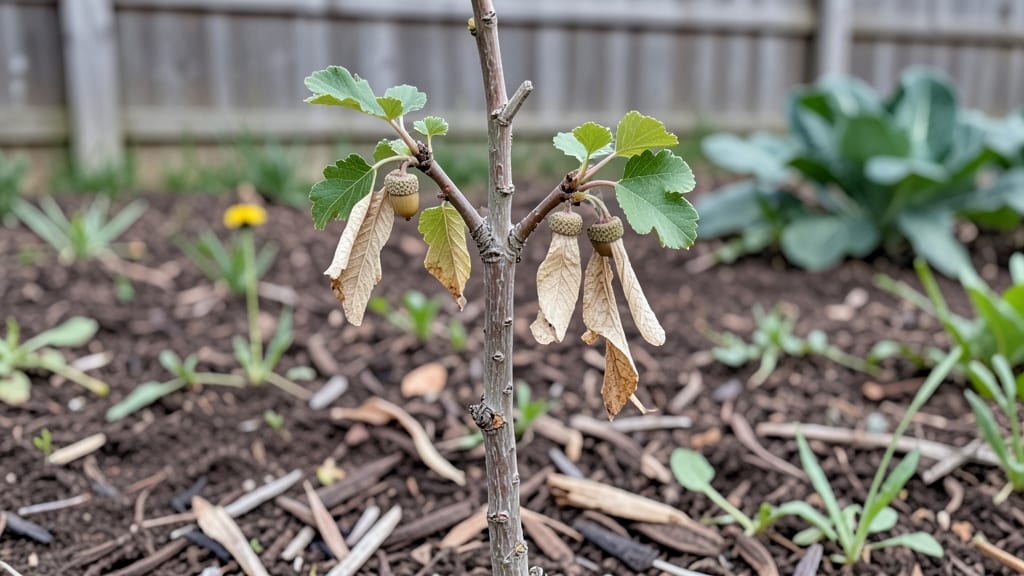
Those whirling oak tree helicopter seeds you spot in fall are the fast-track to growing saplings—just collect them, and the best ones will sprout in days with a few simple tricks. months for nature’s slow pace.
The secret lies in mimicking how acorns would naturally sprout in a forest. You’ll need a damp paper towel, a plastic bag, and a sunny windowsill to kickstart germination in just 2-3 weeks—instead of the 6-12 months it might take in the ground.
Once those tiny roots appear, you’ll transplant them into well-draining soil, giving them the strong foundation they need to outpace slower-growing seedlings.
By spring, you’ll have sturdy saplings ready for planting, their roots already established and ready to take hold. The key is patience in the early stages—those first few weeks of moisture control make all the difference between a thriving oak and a struggling one.
You’ll end up with trees that grow 2-3 feet taller per year, shading your yard faster than you’d expect.
Works for red, white, or pin oak varieties, and even adapts to container growing if you’re short on space. The best part? You’ll be growing future shade trees from seeds you collected yourself—no nursery needed.
📚 In This Guide
- What you need
- Instructions
- Tips and common mistakes
- Wrapping up and next steps
What you need
- ● Oak acorn seeds (helicopter seeds): 10–20 fresh, mature acorns (ensure they’re plump and free of cracks or mold).
- ● Well-draining potting mix: 2–3 lbs of a blend designed for seedlings (e.g., 50% peat moss, 30% perlite, 20% sand).
- ● Small seedling pots or trays: 4–6 biodegradable pots (3–4 inches deep) or a shallow tray with drainage holes.
- ● Watering can or spray bottle: With a fine mist nozzle for gentle hydration.
- ● Plastic wrap or clear lid: To create a mini greenhouse effect (e.g., a ziplock bag or humidity dome).
- ● Sunlight access: A south-facing window or grow light (12+ hours/day).
- ● Seed stratification kit: A DIY setup (e.g., damp paper towels in a sealed container) or store-bought cooler for cold treatment.
- ● Heat mat: To maintain soil temps between 70–80°F (21–27°C) for faster germination.
- ● Fertilizer: A diluted, organic seedling fertilizer (e.g., fish emulsion) for transplanting.
- ● Label markers: To track planting dates and varieties.
- ● Outdoor space: A shady, sheltered spot for hardening off seedlings before planting.
Step-by-Step instructions for growing oak tree helicopter seeds
Here’s how to speed up germination and grow sturdy oak saplings in just a few weeks.
Collect and Stratify the Seeds
Oak seeds need a cold period to break dormancy, so gather helicopter seeds (acorns with wings) in late fall. Place them in a paper towel inside a sealed plastic bag and refrigerate for 90 days. This mimics winter conditions and triggers germination.
Check the bag every 2 weeks—when the seeds begin to sprout, they’re ready for planting. If you’re short on time, soak the seeds in lukewarm water for 24 hours before stratification to kickstart the process.
Prepare the Planting Medium
Use a lightweight seed-starting mix in small pots or trays with drainage holes. Fill them ¾ full, leaving space for seeds to sit on top without burying. Oak seeds germinate best in well-draining soil—avoid heavy garden soil, which can suffocate roots.
Moisten the mix until it’s damp but not soggy. Press the soil down gently to remove air pockets, then place the pots in a shady spot for 1-2 weeks before planting. This prevents the soil from drying out too quickly once seeds are added.
Plant the Seeds at the Right Depth
Place 1-2 seeds per pot, pressing them lightly into the soil so they’re ½ inch deep. Cover them with a thin layer of mix—too much depth slows germination. Label each pot with the date and variety if possible.
Keep the soil consistently moist by misting lightly every 2-3 days. Use a spray bottle to avoid disturbing the seeds. Within 2-4 weeks, you should see sprouts emerging—this is your signal that stratification worked.
Provide Optimal Light and Care
Once sprouts appear, move pots to a bright, indirect light spot. Oak seedlings need 6-8 hours of sunlight daily but can scorch if exposed too soon. Gradually introduce them to direct sunlight over 1-2 weeks to harden them off.
Water when the top inch of soil feels dry, but avoid overwatering—oak seedlings are prone to root rot. Fertilize lightly with a balanced, water-soluble fertilizer every 4-6 weeks once leaves appear.
Transplant Young Saplings
After 6-8 weeks, when seedlings reach 4-6 inches tall, transplant them to larger pots or the ground. Choose a sunny, well-drained location with 6+ hours of light daily. Dig a hole twice as wide as the root ball but only as deep as the container.
Water deeply after transplanting to settle the soil. Mulch around the base with 2-3 inches of organic mulch to retain moisture and protect roots. Oak trees grow slowly, so patience is key—expect 1-2 feet of growth per year in ideal conditions.
Tips & tricks for perfect oak tree helicopter seed germination
Speeding up oak seed germination takes patience and the right approach—here's how to maximize your success without cutting corners.
The Stratification Secret: The 90-day refrigeration period is non-negotiable for breaking oak seed dormancy, but you can optimize it. Place a damp paper towel with your seeds between two paper towels in a sealed bag—this creates a more consistent moisture environment than just wrapping them. I've found that adding a few drops of lukewarm water to the bag every 2 weeks prevents drying while maintaining that crucial cold treatment.
Timing Tip for Step 1: That 24-hour lukewarm water soak before stratification is your secret weapon if you're working against time. Think of it as jump-starting the seeds' metabolic processes. After soaking, gently blot them dry with a paper towel before refrigerating to prevent mold growth. This step can cut your waiting time by up to 2 weeks while maintaining strong germination rates.
Light Management in Step 4: Oak seedlings are particularly sensitive to sudden light exposure. When moving them from indirect to direct sunlight over 1-2 weeks, I recommend using a sheer curtain or shade cloth during the transition. This gradual hardening process prevents sunburn while still allowing them to develop the chlorophyll they need. Watch for leaves that look slightly wilted—they're telling you to slow down the light exposure.
Transplanting Wisdom: The 6-8 week transplant window is ideal, but don't rush it. Look for seedlings that have developed their first true leaves (not just the initial seed leaves) before moving them. When transplanting, water the seedlings thoroughly the day before to reduce transplant shock. The twice-as-wide hole recommendation is crucial—it gives roots room to expand without circling, which prevents girdling as the tree matures.
Pro Tips for Oak Tree Helicopter Seeds
- Speeding up oak seed germination takes patience and the right approach—here's how to maximize your success without cutting corners.
- The Stratification Secret: The 90-day refrigeration period is non-negotiable for breaking oak seed dormancy, but you can optimize it.
- Timing Tip for Step 1: That 24-hour lukewarm water soak before stratification is your secret weapon if you're working against time.
Frequently asked questions
Got questions about those whirly oak tree seeds? You’re not alone!
Here are some of the most common queries—and their answers—to help you grow strong saplings with ease.
Why do oak seeds look like tiny helicopters?
Those "helicopters" are actually samaras—winged seed pods designed by nature to spin and glide on the wind! The spiral shape helps them travel farther from the parent tree, increasing the odds of finding a good spot to grow. Think of them as nature’s built-in seed dispersal system!
How long does it take for oak helicopter seeds to germinate?
Patience is key! Oak seeds can take anywhere from 3 months to 2 years to germinate, depending on the species and conditions. Cold stratification (mimicking winter) speeds things up—try chilling them in a damp paper towel in the fridge for 6–12 weeks before planting.
Can I plant oak helicopter seeds directly in the ground?
Yes, but timing matters! Plant them in fall (autumn) for natural stratification, or early spring after chilling. Dig a shallow hole (1–2 inches deep), place the seed wings-down, and cover lightly. Avoid burying too deep—they need light to sprout!
What if my oak seeds won’t sprout?
Don’t worry—oaks are stubborn! Try these fixes:
- Check moisture: Keep soil damp (not soggy) but not waterlogged.
- Test viability: Cut open a seed—if it’s brown and mushy, it’s likely dead.
- Re-stratify: Give them another 4–6 weeks in the fridge.
- Alternative method: Scarify the seed coat with sandpaper to help water penetrate.
How do I tell if my sapling is a real oak?
Look for these telltale signs:
- Leaves: Lobed edges (like a brain! ) or smooth-edged in white oaks.
- Seedling shape: Young oaks often have a single straight stem with small, clustered leaves.
- Growth rate: Oaks grow slowly—if it’s shooting up fast, it might be a weed or fast-growing tree.
Wrapping up and next steps
Growing oak trees from those iconic helicopter seeds is a rewarding journey that connects you to nature’s resilience! 🌱 With the right preparation—like soaking, planting depth, and patience—you’ll nurture strong saplings that’ll thrive for generations. Now’s your chance to take action: gather your seeds, follow the steps, and watch your little acorns transform into towering oaks!
Ready to plant your future forest? Start small today—your backyard (or a local park!) will thank you. 🌳