Flowers
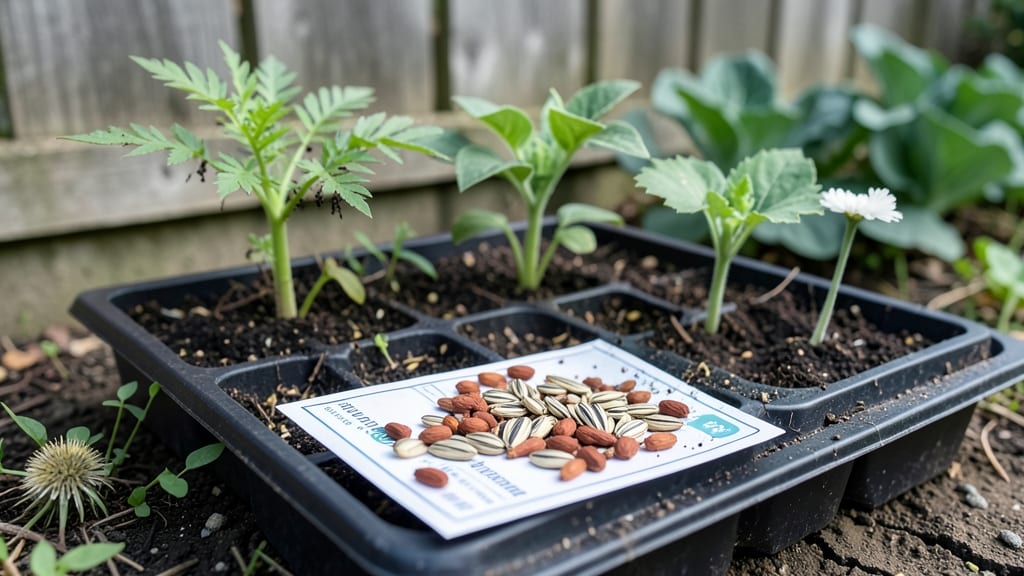
Identifying flower seeds by their leaf shape is the first step to growing what you actually want—not what you accidentally planted. 🌱 I’ve spent years sorting through seed packets and garden debris, and I can tell you: those tiny leaves hold the key to avoiding a garden full of weeds or the wrong varieties.
A single misidentified seed can turn your dream garden into a patch of volunteer sunflowers or wildflowers you didn’t ask for.
The trick is comparing those first true leaves to known shapes—some are round and lobed (like cosmos), others are narrow and feathery (like snapdragons), and a few look like tiny fern fronds (think of sweet peas).
Most seed packets include a tiny illustration, but if you’re working with unknown seeds, a magnifying glass and a seed-identifying app become your best friends. I keep a notebook with sketches of the leaves I’ve seen, and it’s saved me from more than one embarrassing mix-up.
Once you’ve matched the leaf shape, cross-check with size and growth habits: annuals sprout fast and die back, while perennials might take weeks to show their true colors. A quick search for “seedling leaf comparison” will pull up side-by-side images that make the differences crystal clear.
You’ll start recognizing patterns in minutes, and your garden will thank you with exactly what you planted—not what you thought you planted.
This method works for heirloom seeds, wildflower mixes, and even those mystery packets from last year’s garden. The only downside? You’ll need to act fast—seedlings change shape as they grow, so timing matters. Start with a handful of common flowers, and soon you’ll be identifying seeds like a pro.
Why Flower Seeds Confuse Identification
Identifying flower seeds by leaf shape can feel like solving a puzzle—especially when seeds look eerily similar across different plants. But why does this happen? The answer lies in evolutionary strategies, seed dispersal mechanics, and botanical adaptations that shape how seeds develop and appear.
Understanding these causes helps you decode leaf clues more accurately. Let’s break down the science behind the confusion.
Some flower seeds intentionally resemble others as a survival tactic. This phenomenon, called mimicry, tricks pollinators, animals, or even wind into spreading seeds more effectively. For example:
- Seed coat texture: Smooth, shiny seeds (like those of Lobelia) may mimic berries to entice birds into ingestion and dispersal.
- Color patterns: Seeds with striped or speckled coatings (common in Echinacea) resemble insect eggs, deterring herbivores from eating them.
- Shape similarities: Round, flat seeds (e.g., Calendula) often mimic those of grasses or weeds, making them harder for predators to spot.
Actionable tip: 🔍 Examine the entire seed structure—not just shape. Look for veins, attachment points (funiculus), or tiny hairs that differ even in look-alike seeds.
Seeds adapted for wind or water transport often evolve lightweight, uniform shapes to maximize travel distance. This leads to deceptive similarities:
- Feathery or winged seeds (e.g., Dandelion, Milkweed) rely on air currents, so their shapes converge into elongated or papery forms.
- Aquatic seeds (like Lotus) develop buoyant, rounded shapes to float, mimicking other water-dispersed species.
- Parachute-like seeds (e.g., Maple) have flat, papery extensions—easy to confuse with seeds from unrelated plants.
Pro tip: 🌡️ Test seed density—wind-dispersed seeds are light as a feather, while water-dispersed ones may sink or float predictably.
Plants within the same botanical family often inherit similar seed traits due to genetic programming. For instance:
| Family | Seed Shape Clues | Examples |
|---|---|---|
| Asteraceae (Sunflower Family) | Tiny, ribbed, or barbed seeds (often with a "pappus" parachute). | Zinnia, Coreopsis |
| Lamiaceae (Mint Family) | Oval, slightly curved seeds with a smooth or net-like surface. | Salvia, Lavender |
| Fabaceae (Pea Family) | Hard, kidney-shaped seeds (often with a "hilum" scar). | Sweet Pea, Lupine |
Key insight: 📊 If seeds share a family, their leaf arrangement or flower structure will also align. Cross-reference with the parent plant’s foliage for confirmation.
Harsh growing conditions can alter seed development, leading to unexpected variations in shape, size, or texture. Common triggers include:
- Drought stress: Seeds may shrink or develop thicker coats (e.g., Desert Marigold seeds become more angular).
- Poor soil nutrients: Leads to malformed seeds (e.g., Petunia seeds might appear lopsided).
- Extreme temperatures: Can cause seeds to split prematurely or fuse abnormally (e.g., Snapdragon seeds may appear "glued" together).
Actionable fix: ✨ Compare seeds from healthy vs. stressed plants—if shapes differ drastically, the environment (not the species) is the culprit.
By recognizing these underlying causes, you’ll sharpen your ability to distinguish subtle leaf and seed differences—even when nature throws curveballs. Next, we’ll explore how to use these clues to pinpoint specific flower families with confidence.
Quick Fixes for Flower Seed ID
Unsure how to tell your flower seeds apart? Whether you’re dealing with blurry photos, missing labels, or overlapping traits, these practical solutions will help you decode your seed collection with confidence. Below, we break down common challenges and their fixes—plus tips to avoid future mix-ups.
Problem: Your seeds resemble each other too closely, making leaf shape or size hard to distinguish.
Solution:
- 📏 Use a magnifying lens or ruler – Measure leaf width, vein patterns, and margins (saw-toothed, smooth, lobed). Even tiny details like hairiness (pubescence) or leaf texture can reveal the species.
- 📸 Take close-up photos – Use natural light and a white background. Apps like PlantNet or iNaturalist can analyze leaf shapes if you upload clear images.
- 🌱 Grow a test batch – Plant a few seeds in small pots. Observe how the seedlings develop—root shape, first true leaves, and growth speed can be dead giveaways.
Prevention Tip: 💡 Label seeds immediately with a waterproof marker and store them in separate envelopes. Add a color-coded dot on each packet for quick visual reference.
Problem: Your seed packets are unlabeled, or the info has faded over time.
Solution:
- 🔎 Reverse-engineer with a seed guide – Compare your seeds to databases like Seed Savers Exchange or The Missouri Botanical Garden’s Plant Finder. Note key traits:
- Seed color (black, brown, striped)
- Size (tiny like poppy vs. large like morning glory)
- Shape (round, flat, winged)
- 🧪 Conduct a germination test – Plant a few seeds in moist paper towels. The speed and shape of sprouts (e.g., monocot vs. dicot) narrow down options.
- 🌿 Consult local gardening groups – Post photos on forums like Gardeners.com or Reddit’s r/gardening. Include your region—native plants often have distinct traits.
Prevention Tip: ✨ Take a “seed inventory photo” before storing. Snap a picture of each packet with a ruler for scale, then upload it to cloud storage (Google Drive, Dropbox) as backup.
Problem: Multiple flowers share the same leaf shape (e.g., snapdragons and foxgloves both have lobed leaves).
Solution:
- 🌸 Focus on the flowers (not just leaves) – If seeds are from blooming plants, observe:
- Flower symmetry (bilateral like snapdragons vs. radial like daisies)
- Petal fusion (e.g., fused in foxgloves vs. separate in columbines)
- Color patterns (spotted, striped, or solid)
- 🌱 Check the stem and growth habit –
- Height (tall like delphiniums vs. bushy like petunias)
- Leaf arrangement (alternate, opposite, or whorled)
- 📊 Create a comparison chart – List traits side by side for suspects (e.g., “My seed has hairy stems and blue flowers → likely borage or comfrey”).
Prevention Tip: 🎯 Buy seeds from reputable sellers who include detailed descriptions. Avoid “mystery seed” mixes unless you’re intentionally experimenting.
Problem: Your seeds refuse to sprout, leaving you questioning whether you’ve misidentified them.
Solution:
- 🌱 Test stratification or scarification – Some seeds (e.g., lupines, peonies) need cold treatment or nicking to break dormancy. Try:
- Cold stratification: Mix seeds with damp sand, refrigerate for 4–8 weeks.
- Hot water soak: Pour boiling water over hard-coated seeds (like larkspur) for 24 hours.
- 🕰️ Check seed viability – Place seeds in a damp paper towel; viable seeds should sprout in 7–14 days. If none do, they may be old or misidentified.
- 🔄 Re-evaluate the source – If seeds were “harvested from a wild plant,” they might be hybrids or unknown varieties. Cross-reference with USDA Plants Database for native species in your area.
Prevention Tip: 📊 Store seeds properly: Keep them dry (<10% moisture) in airtight containers in the fridge. Label with the harvest year—most seeds lose viability after 1–5 years.
Final Pro Tip: 🌟 When in doubt, start small! Plant 2–3 seeds from each “mystery” batch in separate pots. Even if you can’t ID them perfectly, you’ll learn their quirks—and might discover a new favorite plant!
Frequently asked questions
How can I tell if my flower seeds are annuals or perennials?
Annual seeds produce plants that complete their life cycle in one growing season, while perennials return year after year. Look for seed packet labels—annuals often have bold "annual" markings. If unlabeled, compare growth habits: annuals sprout quickly and bolt (flower then die), while perennials develop slowly with woody stems or thick roots.
What tools do I need to identify unknown flower seeds?
Start with a magnifying glass (10x magnification) and a ruler for measuring seed size. A seed-identifying app like PlantNet or a printed seed guidebook (e.g., "The Seed Starting Bible") helps compare shapes. For tricky cases, a digital scale (to weigh seeds) and a notebook for sketches of leaf patterns will sharpen your skills.
Why do some flower seeds look identical but belong to different plants?
Many seeds evolve similar shapes due to shared dispersal methods (wind/water) or family traits. For example, both cosmos and zinnia (Asteraceae family) produce tiny, ribbed seeds with parachute-like attachments. Focus on leaf arrangement (alternate vs. opposite) or flower structure to distinguish them—these traits rarely mimic across species.
Can I identify flower seeds without growing them first?
Yes! Use a seed database like the USDA Plants Database or Seed Savers Exchange to match traits. Note the seed’s color, texture (smooth/rough), and attachment point. For tricky cases, post high-res photos to gardening forums (e.g., r/gardening) with your location—regional experts often recognize local species instantly.
What’s the best way to store identified flower seeds for next year?
Keep seeds in airtight containers (glass jars or resealable bags) with a silica gel packet to absorb moisture. Store in a cool (32–40°F), dark place (like a fridge) and label with the species name and harvest year. Most flower seeds stay viable for 1–3 years, though some (like poppies) lose potency after just 1 year.