
Vegetables
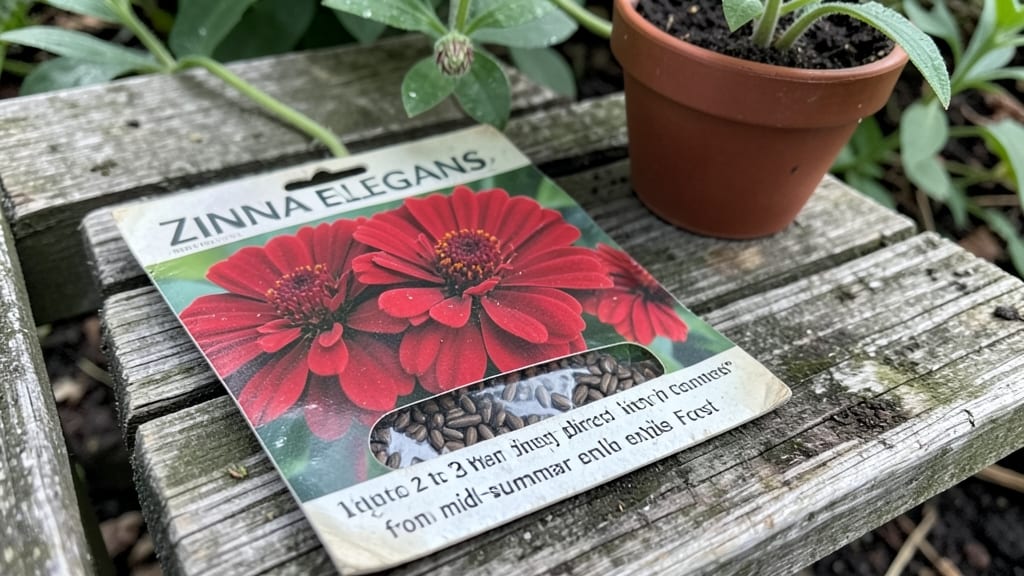
Understanding annual seeds meaning reveals plants designed to thrive, bloom, and produce seeds in a single season before completing their life cycle. These fast-growing varieties contrast perennials by focusing all energy on reproduction rather than long-term survival.
Annual plants follow a biological strategy where they prioritize rapid growth and seed production over longevity. 🌱 This means they germinate quickly, mature fast, and die after flowering—often within 60-90 days—while storing energy in their seeds for next year's growth.
The trade-off? Their vibrant blooms and edible harvests arrive sooner than perennials, making them ideal for gardeners who want immediate results.
What sets annuals apart is their complete life cycle compression. Unlike perennials that invest in root systems or woody growth, annuals allocate nearly all resources to above-ground development.
This explains why varieties like zinnias or radishes produce flowers or edible roots so quickly—nature's way of ensuring genetic survival through volume rather than individual plant longevity.
💡 In This Article
- How Annual Plant Life Cycles Work
- Choosing Annual Seeds for Your Garden
How annual plant life cycles work
Annual plants operate on a biological clock that compresses their entire existence into a single growing season. The process begins with seed germination, where stored nutrients in the seed trigger rapid cell division within 3-14 days depending on species and conditions.
Unlike perennials that develop extensive root systems, annuals prioritize above-ground growth, directing energy to leaf expansion and photosynthesis within 2-4 weeks to maximize sunlight capture. This metabolic efficiency allows them to reach maturity faster than perennial counterparts.
The key mechanism is their reproductive strategy: annuals allocate nearly 80-90% of their energy to flowering and seed production rather than structural maintenance. For example, marigolds can produce 50-100 flowers per plant in just 60 days, while radishes develop edible roots in 25-30 days.
This rapid flowering is possible because annuals skip the energy-intensive process of developing woody stems or perennial roots, instead investing in vibrant, showy blooms that attract pollinators to ensure seed dispersal.
What most gardeners don't realize is how this life cycle affects plant physiology. Annuals have a shorter lifespan because their vascular systems aren't designed for long-term survival—they're essentially temporary pipelines for nutrient transport to reproductive organs.
Compare this to perennials like asparagus, which allocate 30-40% of energy to root development over multiple years. The trade-off? Annuals deliver quicker results but require annual replanting, while perennials offer persistent harvests with less maintenance.
Temperature and daylight play critical roles in this cycle. Many annuals rely on photoperiodism—responding to daylight length—to trigger flowering. For instance, lettuce begins bolting (flowering) when days shorten, while tomatoes flower more prolifically in 70-85°F temperatures.
This environmental sensitivity explains why annuals thrive in warm climates but may struggle in cooler regions with shorter growing seasons. Their entire life cycle is finely tuned to capitalize on optimal conditions for reproduction before seasonal changes occur.
Consider the metabolic cost: annuals achieve their rapid growth through a process called "r-selection," where they prioritize reproduction over survival. This strategy produces many small seeds (like cosmos) that can spread widely, increasing chances of germination in diverse conditions.
In contrast, perennials use "K-selection," investing in fewer, larger seeds with higher survival rates. The result? Annuals dominate disturbed ecosystems where quick colonization is advantageous, while perennials excel in stable environments.
The death of annuals isn't a failure—it's the final act of their reproductive strategy. As temperatures drop or days shorten, the plant's energy shifts entirely to seed maturation. These seeds contain all the genetic information needed to restart the cycle, complete with dormancy mechanisms to survive until favorable conditions return.
This complete life cycle in one season explains why annuals like sunflowers can grow 10 feet tall in just 90 days—their entire existence is a sprint toward reproduction. 🌱