Flowers
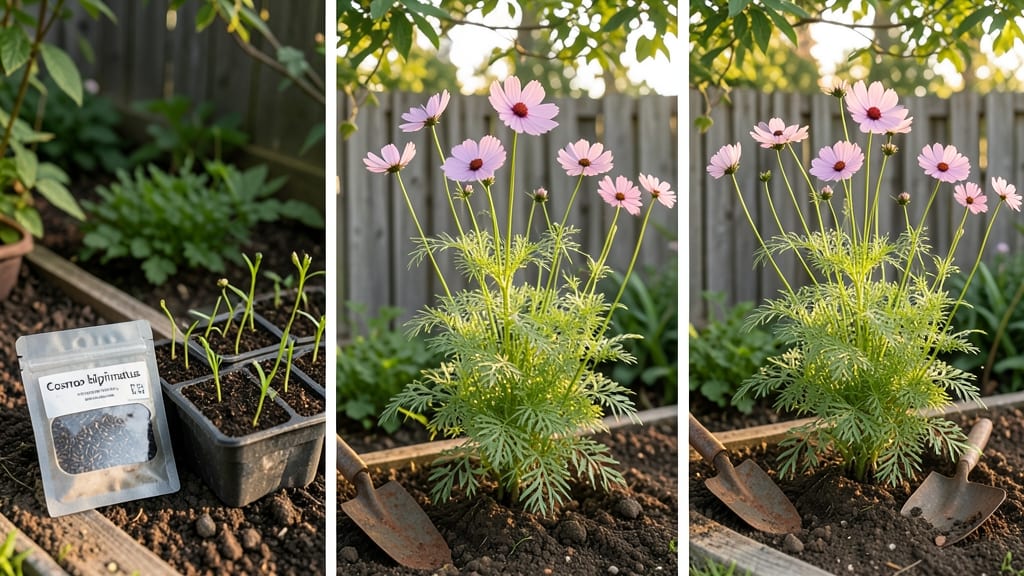
Growing cosmos flowers from seeds gives you vibrant, carefree blooms that start popping up in just seven days—no fancy greenhouse needed. ✨ I’ll never forget the first time I scattered seeds in my backyard and watched those delicate fern-like leaves unfurl within a week.
Cosmos thrive where other flowers struggle, turning sun-drenched corners into effortless color explosions.
The secret to their speed? They love hot, dry conditions and well-draining soil—no need for rich compost or constant watering. Start seeds directly in the garden after your last frost when soil reaches 60°F, or sow indoors 4-6 weeks before transplanting.
Choose between dwarf varieties (12 inches tall) or towering giants (up to 6 feet), all of which self-seed like crazy for next year’s free show.
By week 3, you’ll be pinching back leggy stems to encourage bushier plants, and by early summer, your garden will burst with pink, white, or magenta blooms that last until frost.
The best part? Butterflies and bees adore them, turning your yard into a pollinator paradise without any extra work. Let’s get those seeds in the ground!
Works in zones 3-11, from coastal gardens to desert landscapes—just give them full sun and forget about fussing over them. Here’s how to make it happen without a single wilted leaf in sight.
📚 In This Guide
- What you need
- Instructions
- Tips and common mistakes
- Wrapping up and next steps
What you need
- ● Cosmos seeds: 1 packet (50-100 seeds, non-GMO preferred for best results). Look for varieties like 'Bright Lights' or 'Sensation Mix' for quick germination!
- ● Seed-starting soil: 1 small pot or tray (4-6 inches deep) filled with sterile, well-draining potting mix (avoid garden soil—it’s too dense!).
- ● Watering can or spray bottle: With a fine mist nozzle to keep seeds moist without drowning them.
- ● Grow lights or sunny windowsill: A south-facing window (6+ hours of sunlight daily) or a LED grow light (12-16 hours/day if indoors).
- ● Plastic wrap or humidity dome: To create a mini greenhouse effect until sprouts appear.
- ○ Biodegradable pots or egg cartons: For transplanting seedlings (optional but helpful for avoiding root disturbance).
- ● Trowel or small spoon: For gently pressing seeds into soil.
- ● Fertilizer (balanced, 10-10-10): A tiny pinch (¼ tsp per gallon of water) once seedlings sprout 2-3 inches tall.
- ● Stakes or tomato cages: For taller cosmos varieties (6+ feet) to support stems as they grow.
- ● Pruning shears: To deadhead spent blooms and encourage more flowers.
- ● Outdoor space or large container: After 7 days (or when seedlings are 3-4 inches tall), cosmos thrive in full sun and loose, rocky soil.
Step-by-Step instructions for growing cosmos flowers from seeds
Here's how to coax those vibrant cosmos blooms from tiny seeds in record time.
🌱 Step 1: Prepare Your Seed Starting Mix and Containers
Cosmos seeds love light and airy soil, so fill your 4-inch pots with the 2 gallons of seed-starting mix you've got ready. I like to press it down gently with my fingers—just enough to remove air pockets but not so hard it becomes compacted. The mix should feel like a damp sponge when squeezed; if it crumbles, add a little water until it holds together.
Real talk: Don't use garden soil. It's too heavy and can smother those delicate seeds. The seed-starting mix gives them the perfect, loose environment to sprout quickly. Once your pots are filled to about ½ inch from the rim, smooth the surface with your hand—this creates a clean landing spot for your seeds.
🌱 Step 2: Sow Seeds Shallowly for Fast Germination
Cosmos seeds are tiny but mighty—plant them just ¼ inch deep in the soil. I use my fingertip to make a small dimple for each seed, then drop them in one by one. Cover them lightly with a sprinkle of additional mix, but don't bury them too deep. The rule is: twice the seed's diameter—any deeper, and they'll take forever to push through.
Gently mist the soil with a spray bottle until it's evenly moist. You want the surface to look damp but not soaked—think of a freshly watered sponge. Place the pots in a warm spot (around 70-75°F) where they can bask in indirect light. This is the moment that matters: within 7 days, you'll see those first tiny sprouts breaking through the soil.
☀️ Step 3: Provide Bright Light Immediately After Sprouting
The instant those first green leaves appear, move your cosmos seedlings to the brightest window you have—or better yet, under a grow light. Cosmos crave 6-8 hours of direct light daily, and they won't hesitate to stretch toward it if they're not getting enough. You'll know they're happy when their stems are sturdy and their leaves are a vibrant green, not pale or leggy.
If your seedlings start leaning toward the light, rotate the pots a quarter turn daily. This ensures even growth and prevents them from becoming lopsided. Keep the soil lightly moist—water when the top inch feels dry to the touch—but never soggy. Overwatering is the fastest way to invite damping-off, a fungal disease that can wipe out seedlings overnight.
🪴 Step 4: Thin Seedlings for Stronger Plants
Once your cosmos seedlings have 2-3 sets of true leaves (those are the larger leaves after the initial seed leaves), it's time to thin them. Gently snip the weaker seedlings at the base with clean scissors, leaving only the strongest plant per pot. I promise, this might feel cruel, but crowded seedlings compete for nutrients and light, resulting in weak, spindly stems.
After thinning, give your remaining seedlings a little extra space by transplanting them into 6-inch pots if you've got them. Fill the new pots with the remaining 1 gallon of seed-starting mix, burying the seedlings to the same depth they were growing before. Water them lightly to help settle the soil around their roots, and place them back under bright light.
⏰ Step 5: Acclimate and Transplant Outdoors
When nighttime temperatures stay above 50°F and all danger of frost has passed, it's time to move your cosmos outdoors. Start by placing them in a shaded, sheltered spot for 1-2 hours the first day. Gradually increase their outdoor time over 5-7 days, letting them adjust to wind and sun. This process is called hardening off, and it's non-negotiable—skipping it will shock your plants and stunt their growth.
Once your cosmos are hardened off, transplant them into the garden or larger containers, spacing them 12-18 inches apart. Cosmos love full sun, so choose a spot where they'll get at least 6 hours of direct sunlight daily. Water them deeply after transplanting, and you'll see those first blooms appear in just 6-8 weeks—a true reward for your patience!
Tips & tricks for growing vibrant cosmos from seeds
Here's what I've learned after growing cosmos from seed for years—these little tricks make all the difference between healthy seedlings and sad, leggy failures.
Soil Prep Secret: In Step 1, when filling your 4-inch pots with the 2 gallons of seed-starting mix, I swear by adding a handful of perlite to each pot. This creates tiny air pockets that prevent compaction and help those delicate seeds breathe. The mix should feel like a damp sponge—if it crumbles, you've added too much water. Trust me, this one small tweak prevents the #1 reason cosmos seedlings fail: suffocation.
Lighting Strategy: The 6-8 hours of direct light in Step 3 is non-negotiable, but here's the pro move: if you're using a grow light, position it just 2-3 inches above the seedlings. Too high, and they'll stretch; too low, and they'll burn. I rotate my lights every 24 hours to ensure even growth—cosmos hate becoming lopsided. And if your seedlings start leaning? That's your cue to move them closer to the light immediately.
Thinning Technique: When you reach Step 4 and need to thin to the strongest plant per pot, I've found that using clean, sharp scissors dipped in rubbing alcohol prevents disease transmission. Snip at the base rather than pulling—this reduces root disturbance and gives your remaining plant a better chance. The remaining 1 gallon of seed-starting mix for your 6-inch pots should be kept ready in a separate container so you're not scrambling during this critical step.
Hardening Off Hack: The 5-7 day hardening off period in Step 5 is where most people rush and regret it. Start with just 1-2 hours in shade on day one, then increase by 1 hour each subsequent day. I place a small fan nearby to simulate wind conditions—they'll thank you later with stronger stems. And here's the kicker: if nighttime temps dip below 50°F, delay transplanting until they stabilize. Cosmos are tough, but they're not frost-proof.
Pro Tips for Cosmos Flowers Seeds
- Here's what I've learned after growing cosmos from seed for years—these little tricks make all the difference between...
- Soil Prep Secret: In Step 1, when filling your 4-inch pots with the 2 gallons of seed-starting mix, I swear by adding...
- Lighting Strategy: The 6-8 hours of direct light in Step 3 is non-negotiable, but here's the pro move: if you're usin...
Frequently asked questions
How long does it take for cosmos seeds to germinate?
Cosmos seeds are fast growers—expect germination in 5 to 10 days after planting, especially in warm soil (60–70°F). Keep the soil moist but not soggy, and place seeds in a sunny spot (or under grow lights) for the best results. Patience pays off with those first tiny sprouts!
Can I plant cosmos seeds directly in the ground, or should I start indoors?
Cosmos seeds thrive when planted directly outdoors after the last frost, as they dislike transplanting. If you’re in a short-growing season, you can start them indoors 4–6 weeks before the last frost, but harden them off gradually to avoid shock. For most gardeners, direct sowing is the easiest route!
Do cosmos flowers need full sun? What if my garden is shady?
Cosmos flowers love full sun (6+ hours daily), but they’ll tolerate partial shade (4–6 hours). In shadier spots, expect fewer blooms or taller, leggier stems. If your garden is shady, try a sunny windowsill or container to give them the light they crave for vibrant flowers.
Are cosmos flowers prone to pests or diseases? How do I protect them?
Cosmos are generally pest-resistant, but watch for aphids, spider mites, or powdery mildew in humid conditions. To prevent issues, space plants 12–18 inches apart for airflow, water at the base (not leaves), and remove spent blooms. A light neem oil spray can also keep pests at bay!
Why aren’t my cosmos flowers blooming? What am I doing wrong?
If your cosmos aren’t blooming, check these fixes:
Not enough sun? Move to a sunnier spot.
Over-fertilizing? Cosmos thrive in poor soil—too much nitrogen = leafy growth, fewer flowers.
Deadheading needed? Snip spent blooms to encourage more flowers.
Watering issues? Let soil dry slightly between waterings.
With these tweaks, you’ll see those cheerful blooms in no time!Wrapping up and next steps
Growing cosmos flowers from seeds is a rewarding journey that brings vibrant color to your garden in just 7 days! Whether you're a seasoned gardener or a beginner, these sun-loving blooms are easy to cultivate and perfect for adding charm to any space. 🌸
Now that you’re armed with the right tips and answers to common questions, it’s time to roll up your sleeves and start planting. Grab those seeds, find a sunny spot, and watch your garden transform into a dazzling cosmos wonderland. Happy gardening! 🌱