Propagation
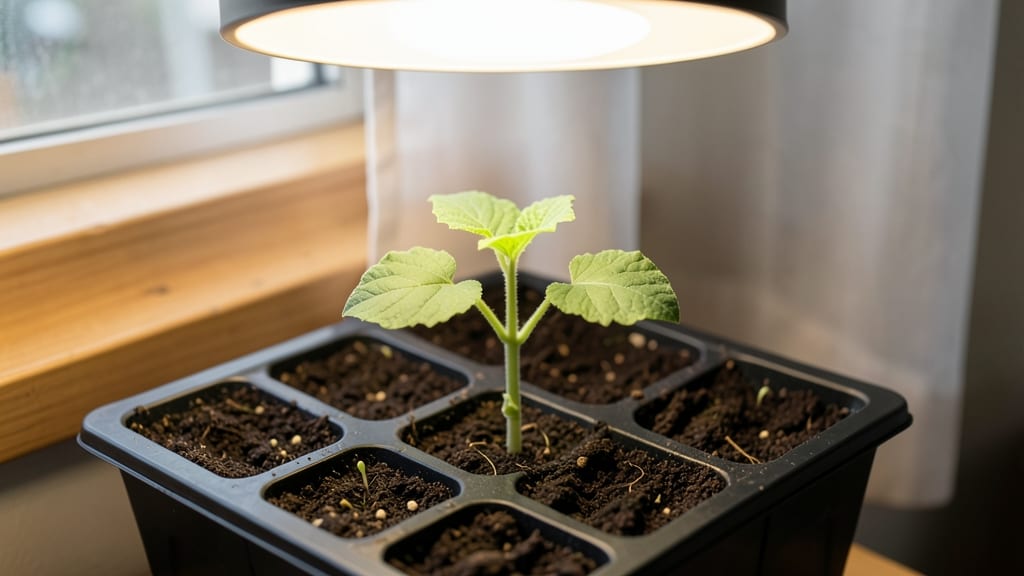
You can start cucumber seeds indoors, but success depends on warm soil and perfect timing—sow them 2-3 weeks before your last frost when soil reaches 70°F (21°C). Heat mats speed up germination, and transplant seedlings outdoors only after they develop true leaves.
Cucumbers thrive when soil stays consistently warm, and indoor starting gives you control over that environment. 🌱 The key is mimicking outdoor conditions as closely as possible—most gardeners use seed-starting trays with bottom heat to maintain those 65-90°F ranges.
Without proper warmth, seeds may rot before sprouting or produce weak, leggy seedlings that struggle later. I’ve found that placing trays on a heat mat under grow lights works best for me, especially in cooler climates where outdoor soil takes longer to warm up.
Once your seedlings have two true leaves, they’re ready for gradual outdoor acclimation. This process, called hardening off, involves exposing them to outdoor conditions for increasing lengths of time over 7-10 days.
Skipping this step can shock plants and stunt their growth—something I learned the hard way my first year trying indoor starts. The payoff? A head start on the growing season and healthier plants that produce more fruit.
💡 In This Article
- Optimal Soil Temperature for Germinating Cucumber Seeds
- Indoor Cucumber Seed Starting: Step-by-Step Guide
Optimal soil temperature for germinating cucumber seeds
Cucumber seeds need warmth to activate the enzymes that break down their protective seed coats and kickstart germination. The ideal soil temperature range sits between 65°F and 90°F (18-32°C), with 77-86°F (25-30°C) being the sweet spot for fastest sprouting.
At these temperatures, the enzymatic activity inside the seed accelerates, allowing water to penetrate efficiently and triggering cell division. Below 50°F (10°C), germination slows dramatically, and seeds may rot before sprouting due to microbial activity.
Here's what's actually happening at the cellular level: Warmth increases the kinetic energy of water molecules in the soil, helping them penetrate the seed coat more effectively. This hydration activates amylase enzymes, which break down starches into sugars that fuel the seedling's growth.
At 70°F (21°C), cucumber seeds typically germinate in 5-7 days, while at 50°F (10°C), it can take 2-3 weeks—if they germinate at all.
The difference comes down to biochemical efficiency: enzymes work optimally within their temperature range, much like how your body functions best at 98.6°F (37°C).
Indoor environments give you precise control over these conditions. Without a heat mat, most household temperatures hover around 68-72°F (20-22°C), which is marginal for cucumbers. That's why gardeners often use seedling heat mats (which maintain 75-85°F (24-29°C)) to replicate ideal germination conditions.
Outdoor soil, meanwhile, can fluctuate wildly—especially in spring—ranging from 40°F (4°C) at night to 75°F (24°C) during the day. This inconsistency is why starting indoors is safer for cucumbers, which are particularly sensitive to cold soil.
Cold soil poses two major risks: damping-off disease (a fungal infection that rots seedlings at the stem) and weak, leggy growth from stretching toward light. When seeds germinate in cool conditions, they expend energy trying to reach warmth and light, leading to spindly stems that can't support themselves.
I've seen cucumber seedlings collapse under their own weight when started in soil below 60°F (15°C). The solution? Maintain consistent warmth and provide 14-16 hours of light daily to prevent etiolation (the term for weak, stretched growth).
For comparison, tomato seeds—another warm-season crop—germinate best at 70-85°F (21-29°C), similar to cucumbers, but can tolerate slightly cooler conditions. Peppers, on the other hand, prefer even warmer soil (80-90°F/27-32°C) and struggle below 65°F (18°C).
This variation highlights why cucumbers need that 65-90°F (18-32°C) range: they're less forgiving than tomatoes but more adaptable than peppers when it comes to temperature fluctuations.
Pro tip: If you're starting seeds in early spring, place your trays on a heat mat and cover them with clear plastic domes to trap warmth and humidity. Monitor soil temperature with a soil thermometer—cheap but invaluable.
Most garden centers sell them for under $10, and they'll save you from wasted seeds. The goal is to mimic the stable, warm conditions cucumbers would find in their native tropical regions.