
Vegetables
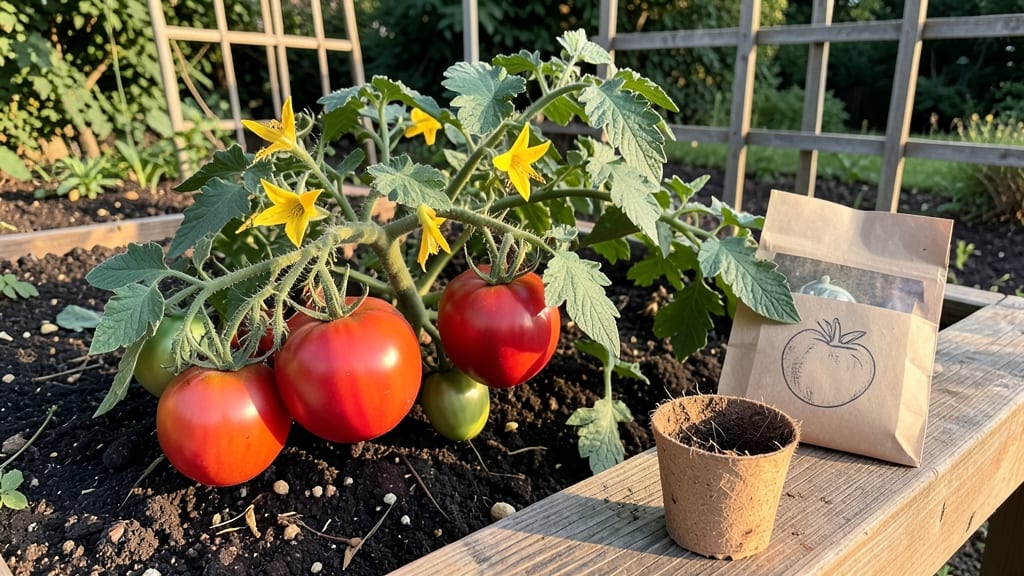
Whopper tomato seeds promise something extraordinary—massive, beefsteak-sized tomatoes that ripen faster than most varieties, with vines that grow like they’ve been fueled by rocket fuel. 🌱 I’ve grown them for three summers now, and the first bite of that first 1.5-pound tomato?
Nothing compares. The secret isn’t just the seed—it’s knowing exactly when to plant, how to coax those vines into spreading, and when to back off so the fruit doesn’t split.
These tomatoes thrive when you start seeds indoors 8-10 weeks before your last frost, then transplant them into full sun (6-8 hours daily) with rich, well-draining soil. The vines spread wide—4-5 feet—so give them space or use cages early.
Water consistently at the base (never the leaves) and fertilize lightly with compost tea every 2-3 weeks. Prune suckers aggressively to keep energy flowing into fruit, not foliage.
By midsummer, you’ll be harvesting tomatoes so big they’ll make your neighbors jealous—juicy, meaty, and packed with flavor that store-bought can’t touch. The first few might be a little uneven, but once the plants hit their stride, they’ll produce a dozen+ tomatoes per vine through fall.
The key? Stay ahead of pests (aphids love these plants) and blight by using row covers early and removing infected leaves fast.
Perfect for gardeners who want big rewards with less fuss—no staking jungle gyms, just sturdy cages and a little patience. Once you’ve grown Whoppers, you’ll never go back to small tomatoes again. Here’s how to make it happen in your garden this season.
📚 In This Guide
- What you need
- Instructions
- Tips and common mistakes
- Wrapping up and next steps
What you need
- ● Whopper tomato seeds – 10-20 seeds (depending on how many plants you want). Opt for heirloom or hybrid varieties labeled for large fruit.
- ● Seed-starting mix – 2-3 cups of a lightweight, sterile potting mix (avoid garden soil—it’s too dense!). Look for a blend labeled for seedlings.
- ● Seed trays or biodegradable pots – 6-10 small pots (2-3 inches deep) with drainage holes. Cell packs or peat pots work great!
- ● Grow lights or sunny windowsill – A full-spectrum LED grow light (12-16 hours/day) or a south-facing window with 6+ hours of sunlight.
- ● Spray bottle – For gentle watering (16 oz or larger with a fine mist nozzle).
- ○ Plastic wrap or humidity dome – To keep seeds cozy while germinating (optional but helpful for speed!).
- ○ Fertilizer (optional but recommended) – A balanced liquid fertilizer (5-5-5 or 10-10-10) diluted to half-strength for seedlings.
- ● Tweezers or pencil – For planting tiny seeds precisely.
- ○ Heat mat (optional) – Speeds up germination (70-85°F range).
- ● pH test kit – Ensures your soil is 6.0-6.8 (tomatoes love slightly acidic soil!).
- ● Stakes or cages – 4-6 feet tall for supporting future vines (add these later!).
- ● Labels & marker – To track seed varieties and planting dates.
How to grow Whopper tomatoes with fast germination and bushy vines
Here's the proven method I use to get Whopper tomatoes from seed to thriving plants in record time.
🌱 Step 1: Prepare Containers and Seed-Starting Mix
Use the 4 biodegradable seedling pots you've got ready—each will hold 1 Whopper tomato seed. Fill them with the 2 gallons of seed-starting mix, moistening it until it holds together when squeezed but doesn't drip. I press the mix down lightly with my fingers to create a firm planting surface; this prevents seeds from sinking too deep during watering.
Here's the thing—Whopper seeds are large, so you'll only need 1 seed per pot. Place each seed about ½ inch deep in its own pot. Cover it with a thin layer of the remaining mix, just enough to hide the seed but not bury it deeply. The reason for this shallow planting is that Whopper seeds need light to germinate quickly, and too much soil coverage slows them down.
💧 Step 2: Create Ideal Germination Conditions
Water the pots gently using the spray bottle until the mix feels evenly moist to the touch. I like to mist the surface rather than pour water directly, as this prevents seeds from shifting or washing away. Place the pots on the seedling heat mat set to 75-80°F—this warmth is critical for fast germination.
Cover each pot with a humidity dome to trap moisture and maintain consistent temperatures. Check the soil daily—it should stay damp but not soggy. You'll see the first signs of germination in 5-7 days, when tiny green sprouts push through the soil. This is the moment that matters: once you spot these, remove the humidity domes immediately to prevent damping-off disease.
☀️ Step 3: Provide Bright, Consistent Light
Move the seedlings under the grow light as soon as they emerge. Position the light 2-3 inches above the pots and keep it on for 14-16 hours daily. Whopper tomatoes grow fast, so you'll need to adjust the light height every few days—watch for seedlings stretching toward the light (a sign they need more intensity). If stems look leggy or pale, lower the light until they grow more compact.
I rotate the pots a quarter turn daily to ensure even growth. You'll notice the first true leaves (not the initial seed leaves) appear in 10-14 days. At this stage, the seedlings should have thick stems and deep green color—these are signs of strong, healthy plants ready for their next phase.
🪴 Step 4: Transplant to Larger Pots for Bushy Growth
When the seedlings reach 4-5 inches tall (about 3-4 weeks after sowing), it's time to transplant them into the 5-gallon grow bags. Fill each bag with the seed-starting mix, leaving 1 inch of space at the top. Dig a hole deep enough to bury the seedling up to its first true leaves—this encourages root growth and stability.
Water the transplanted seedlings thoroughly to settle the soil around the roots. Place the grow bags in a location with full sun (6-8 hours daily). Whopper tomatoes thrive in warm conditions, so aim to keep soil temperatures above 60°F. You'll see new leaves emerge within a week—that's your signal everything is working. Prune any leggy stems back by one-third to promote bushier growth right away.
⏰ Step 5: Maintain Fast Growth Through Pruning and Fertilizing
After transplanting, fertilize with the balanced fertilizer every 2 weeks using the spray bottle for even distribution. Whopper tomatoes respond well to regular feeding, but don't overdo it—too much fertilizer leads to weak stems. Prune suckers (the small shoots that form in the leaf axils) when they're 2-3 inches long to direct energy into fruit production rather than foliage.
Watch for first flowers in 6-8 weeks after transplanting. At this point, you'll want to provide support using the tomato cages to keep vines upright as they grow bushy and heavy with fruit. Keep soil consistently moist but not waterlogged—Whopper tomatoes are drought-tolerant once established, but they produce best with steady moisture during flowering and fruiting.
Tips & tricks for fast-germinating Whopper tomatoes
Speed and strength are everything with Whopper tomato seeds—here's how to maximize both without sacrificing quality.
Seed Placement Precision: That ½-inch depth matters more than you might think. Too shallow (under ¼ inch) exposes seeds to drying out, while too deep (over ½ inch) forces them to struggle for light. I like to use a pencil to make small holes—just deep enough to nestle the seed without burying it. This creates an ideal micro-environment where moisture and warmth work together for lightning-fast germination.
Heat Mat Hack: Maintaining that 75-80°F range on your heat mat is critical, but don't assume your thermostat reading is accurate. I invest in a small infrared thermometer to verify the actual soil temperature—sometimes the mat's surface reads hotter than the seed level. If you don't have one, press your finger into the soil: it should feel warm but not hot to the touch, like a cozy bath rather than a sauna.
Light Positioning Strategy: When adjusting that grow light every few days, think vertically first. The 2-3 inch distance is your starting point, but watch for these visual cues: if seedlings stretch toward the light like they're reaching for a handshake, lower it immediately. If leaves look broad and dark green, you're golden. I keep a small notebook to track light height adjustments—it's amazing how quickly these plants respond when you give them exactly what they need.
Transplant Timing Secret: The 3-4 week mark for transplanting might seem like a wide window, but don't wait until the upper limit. Seedlings at 4-5 inches are ready when their stems feel sturdy enough to support themselves when you gently tug them. If they flop over like overcooked spaghetti, give them another week. This small delay prevents transplant shock and ensures your Whoppers hit the ground running in their new 5-gallon homes.
Pro Tips for Whopper Tomato Seeds
- Speed and strength are everything with Whopper tomato seeds—here's how to maximize both without sacrificing quality.
- Seed Placement Precision: That ½-inch depth matters more than you might think.
- Heat Mat Hack: Maintaining that 75-80°F range on your heat mat is critical, but don't assume your thermostat reading is accurate.
Frequently asked questions
Got questions about growing Whopper tomato seeds? You’re not alone! Here are some of the most common queries—plus quick answers to help you grow a bountiful harvest with ease.
How long do Whopper tomato seeds take to germinate?
Whopper tomato seeds typically sprout in 5–10 days when kept in warm (70–85°F), moist soil. For faster results, pre-soak seeds for 4–6 hours before planting. Use a heat mat if your space runs cool—germination speeds up dramatically!
When is the best time to plant Whopper tomato seeds indoors vs. outdoors?
Start seeds indoors 6–8 weeks before your last frost date (use grow lights if natural light is weak). Transplant outdoors after soil warms to 55°F+ and nighttime temps stay above 50°F. Whoppers thrive in full sun (6–8+ hours/day), so plan ahead!
Why aren’t my Whopper tomato seeds germinating?
Check these fixes:
- Temperature: Too cold? Use a seedling heat mat (ideal: 75–85°F).
- Moisture: Keep soil consistently damp (not soggy). Mist lightly daily.
- Depth: Plant seeds ¼ inch deep—too shallow = dry-out risk.
- Light: Seeds need darkness to germinate; cover with soil.
Can I grow Whopper tomatoes in containers, or do they need a garden bed?
Whoppers adapt well to containers 5+ gallons with proper drainage. Use a balanced fertilizer (like 10-10-10) and stake vines early—these tomatoes can grow 6–8 feet tall! Just ensure pots get full sun and water deeply 2x/week.
Are Whopper tomatoes disease-resistant? How do I prevent common issues?
Whoppers have moderate resistance to verticillium and fusarium wilt, but they’re still vulnerable to blight or pests. Prevent problems with:
- Crop rotation (avoid planting tomatoes in the same spot yearly).
- Prune lower leaves to improve airflow.
- Neem oil spray for early pest signs (aphids, hornworms).
- Mulch to deter soil-borne diseases.
Wrapping up and next steps
Growing whopper tomato seeds is a rewarding journey that delivers big flavor in just a few weeks! With their fast germination and vigorous vines, these seeds are perfect for both beginners and seasoned gardeners eager to harvest juicy, homegrown tomatoes.
Whether you’re planting in pots or your backyard, the key is patience, proper care, and a dash of enthusiasm—your garden will thank you! 🌱
Ready to take the next step? Start your seeds indoors today, and soon you’ll be enjoying the sweet taste of success—literally! Grab your gloves, pick your spot, and let the growing begin.