
Planting
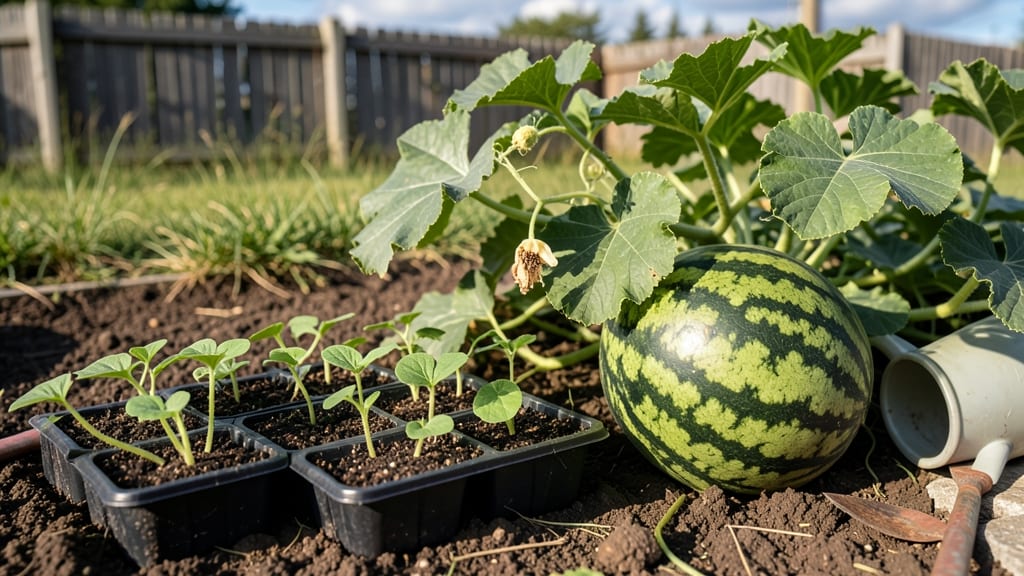
Proper watermelon seed spacing can turn a handful of plants into a bountiful harvest. 🌱 I’ve learned the hard way that cramming seeds too close leads to competition, stunted growth, and fewer melons—so I now follow a fail-safe layout that maximizes space and sunlight for each vine.
The key is spacing seeds 1–2 inches apart in rows that are 6–8 feet apart, giving vines room to sprawl without crowding. For larger varieties like Sugar Baby, aim for the wider end of that range, while smaller types like Crimson Sweet can handle closer spacing.
A well-prepped, loose soil with compost ensures roots spread easily without resistance.
By mid-summer, you’ll see vines stretching 6–12 feet long, each producing 2–3 melons instead of just one. The trick is thinning seedlings early to avoid overcrowding—this might sound harsh, but it guarantees bigger, sweeter fruit. Plus, you’ll skip the frustration of tangled vines and missed harvests.
This method works in warm climates like Zone 8–10, but even cooler areas can adapt by using black plastic mulch to warm the soil. Whether you’re a first-timer or a seasoned grower, this layout cuts the guesswork and delivers consistent, high-yield results every season.
📚 In This Guide
- What you need
- Instructions
- Tips and common mistakes
- Wrapping up and next steps
What you need
- ● Watermelon seeds: Choose high-quality, disease-resistant varieties (e.g., 'Sugar Baby,' 'Crimson Sweet,' or 'Charleston Gray'). Aim for 3-5 seeds per hill (or 1 seed per cell if using seed trays).
- ● Seed-starting soil or potting mix: Lightweight, well-draining mix (e.g., Pro-Mix HP or coconut coir). For direct sowing, use 1 part compost to 3 parts garden soil.
- ● Garden bed or containers: For in-ground planting: A sunny spot with 6+ hours of direct sunlight and well-drained soil (pH 6.0–7.0). Prepare a bed at least 3–4 feet wide per row.
- ● For container growing: Large pots (minimum 5-gallon capacity) or fabric grow bags with drainage holes.
- ● Planting tools: Hand trowel or transplanting spade
- ● Garden rake (for loosening soil)
- ● Measuring tape or ruler (for precise spacing)
- ● Mulch: Straw, black plastic, or shredded leaves to retain moisture and suppress weeds. Use 2–3 inches of mulch once seedlings emerge.
- ● Watering can or hose with a gentle spray nozzle: Avoid disturbing seeds during watering.
- ○ Fertilizer (optional but recommended): Balanced organic fertilizer (e.g., 10-10-10 or fish emulsion) for transplanting.
- ● Compost tea or liquid kelp for foliar feeding (boosts growth).
- ● Row covers or frost cloth: Protects young seedlings from pests or late frosts.
- ● Trellis or stakes: Supports vining varieties (e.g., 'Jubilee') to save space.
- ● Seedling heat mat: Speeds up germination if starting indoors in cool climates.
- ● Soil thermometer: Ensures seeds are planted when soil temps reach 70°F+ (critical for germination!).
- ● Plant markers: Label seeds or hills to track varieties and spacing.
Step-by-Step guide to optimal watermelon seed spacing
Here’s how to arrange your watermelon seeds for maximum fruit production—no guesswork, just proven spacing science.
🌱 Step 1: Choose Your Planting Method and Soil Prep
Watermelons thrive in well-draining, fertile soil with a pH between 6.0 and 6.8. Before planting, loosen the top 12 inches of soil with a broadfork or tiller to improve root penetration. Incorporate 2-3 inches of compost into the bed—this boosts early growth and fruit development. If your soil is heavy clay, mix in 1 part sand to improve drainage.
Decide between hill planting (mounds) or flat-row planting. Hill planting works best in cooler climates, while flat rows suit warmer regions. For hills, mound soil into 12-inch-tall, 2-foot-wide pyramids spaced 5 feet apart. This elevation helps prevent rot and improves airflow around the vines.
🌿 Step 2: Plant Seeds at the Correct Depth and Spacing
For flat-row planting, sow seeds ½ inch deep in rows spaced 6 feet apart. Place 3-4 seeds per hill (if using mounds) or 2-3 seeds per spot in flat rows, spacing individual hills 3 feet apart. Watermelons need room to sprawl—crowding leads to stunted vines and poor fruit quality.
Thin seedlings to 1-2 strong plants per hill once they develop 2-3 true leaves. Use scissors to snip weak stems at soil level—this prevents disturbing roots of remaining plants. I always mark hills with stakes or flags to avoid accidentally disturbing them later.
☀️ Step 3: Train Vines and Maintain Spacing as They Grow
Watermelon vines can stretch 10-20 feet, so guide them early. Install trellises or wire supports along rows if space is limited, but leave 18 inches of clearance between vines and supports to prevent fruit abrasion. For ground-sprawling varieties, create wide pathways (3-4 feet) between rows for easy access and airflow.
Watch for runners (side vines) emerging from the main stem. Prune these back to 12 inches if they appear within 2 feet of the main vine—this redirects energy to fruit production. You’ll know you’re on track when vines fill the allotted space without overlapping neighbors.
💧 Step 4: Water and Mulch to Preserve Spacing Benefits
Watermelons need 1-2 inches of water weekly, delivered at the soil base (not overhead). Use drip irrigation or soaker hoses to keep foliage dry, reducing disease risk. Apply 3-4 inches of organic mulch (straw or shredded leaves) around plants to suppress weeds and retain moisture—this also prevents soil compaction from foot traffic.
Replenish mulch every 4-6 weeks as it breaks down. Avoid piling mulch against stems, which can trap moisture and cause rot. You’ll see healthy, sprawling vines with dark green leaves—a sign your spacing and care are working.
✂️ Step 5: Thin Fruit for Optimal Yield and Spacing
Once 3-4 fruits per vine reach golf-ball size, remove the smallest ones. Overcrowded fruit leads to small, seedy watermelons and weak vines. Leave 1-2 melons per vine for varieties like ‘Sugar Baby’ or 3-4 melons for larger types like ‘Crimson Sweet’. You’ll know it’s time when vines struggle to support multiple heavy fruits.
Harvest when the underside turns cream-colored and the stem detaches easily with a slight twist. Proper spacing ensures each melon gets full sun exposure and unobstructed airflow, which is key for sweetness and disease prevention.
Tips & tricks for perfect watermelon seed spacing
Proper spacing isn't just about giving vines room to grow—it's the foundation for disease prevention, fruit quality, and maximum yield. Here's how to elevate your planting game with science-backed techniques.
Soil Prep Secret: The 12-inch soil loosening in Step 1 isn't just about roots—it's about creating an oxygen-rich zone where roots can breathe. I've seen watermelons struggle in compacted soil even when everything else was perfect. For clay-heavy soils, mix in 1 part sand to create that ideal porous structure. Think of it as giving your plants lungs rather than just dirt.
Spacing Visualization: When creating those 5-foot spaces between hills (Step 1), imagine a hula hoop—your vines should have that much room to sprawl without touching. For flat rows, the 6-foot spacing between rows might feel excessive, but trust me: this prevents powdery mildew by improving airflow. I've lost entire crops to fungal diseases when I tried to squeeze plants too close.
Thinning Technique: The 2-3 true leaves threshold in Step 2 is your cue to thin ruthlessly. Don't hesitate to remove weak seedlings—this isn't about quantity, it's about quality. I use clean scissors to snip at soil level, which prevents disturbing the roots of remaining plants. Mark your hills with stakes or flags immediately after thinning so you don't accidentally disturb them later when walking through the garden.
Vine Training Insight: Those 18 inches of clearance between vines and supports in Step 3 might seem like overkill, but it's crucial. Fruit rubbing against trellises creates abrasions that become entry points for disease. For ground-sprawling varieties, create those 3-4 foot pathways—they're not just for you, they're for your plants. Proper circulation prevents rot and makes harvesting easier when those melons get heavy.
Pro Tips for Watermelon Seed Spacing
- Proper spacing isn't just about giving vines room to grow—it's the foundation for disease prevention, fruit quality, and maximum yield.
- Soil Prep Secret: The 12-inch soil loosening in Step 1 isn't just about roots—it's about creating an oxygen-rich zone where roots can breathe.
- Spacing Visualization: When creating those 5-foot spaces between hills (Step 1), imagine a hula hoop—your vines should have that much room to sprawl without touching.
Frequently asked questions
Got questions about watermelon seed spacing?
You’re not alone! Here are some of the most common queries—plus straightforward answers to help you grow a bountiful harvest.
How far apart should I space watermelon seeds?
For optimal growth, space watermelon seeds 1 to 2 inches deep and 6 to 12 inches apart in rows. If planting in hills, group 3–4 seeds per hill with 3–5 feet between hills. This gives vines room to sprawl without competing for nutrients.
Can I plant watermelon seeds too close together?
Yes, but expect smaller, lower-quality fruit due to overcrowding. Seeds packed too tightly (less than 6 inches apart) lead to poor air circulation, increasing disease risk and stunting vine growth. Thin seedlings to the recommended spacing once they’re 2–3 inches tall.
What’s the best time to thin watermelon seedlings?
Thin seedlings when they’re 1–2 weeks old and have 2–4 true leaves. Use sharp scissors or your fingers to snip or gently pull weaker plants at the soil line. Pro tip: Thin on a cloudy day to reduce stress on remaining plants.
Can I use mulch to save space between watermelon plants?
Mulch (straw, grass clippings, or black plastic) helps conserve moisture and suppress weeds, allowing you to space plants slightly closer (e.g., 4–6 inches apart) if needed. Just leave 3–5 feet between rows for vine spread. Avoid organic mulch if humidity is high—it can promote fungal diseases.
My watermelon vines are sprawling everywhere—how do I fix overcrowding?
If vines are already too close, prune aggressively by cutting back excess growth to 1–2 main vines per plant. Train remaining vines along a trellis or use straw bales to elevate them, improving airflow. For future plants, space seeds wider or use container growing (1 plant per 5-gallon pot) to control sprawl.
Wrapping up and next steps
Perfecting your watermelon seed spacing is the secret to a bountiful harvest!
By following proven layouts—like 24-inch rows with seeds spaced 6–12 inches apart—you’ll give your vines the room they need to thrive. Now that you’re armed with the right knowledge, it’s time to roll up your sleeves and plant with confidence!
Ready to take the next step? Start sketching your garden layout or grab your seeds and tools—your future juicy watermelons are waiting! 🌱🍉