Vegetables
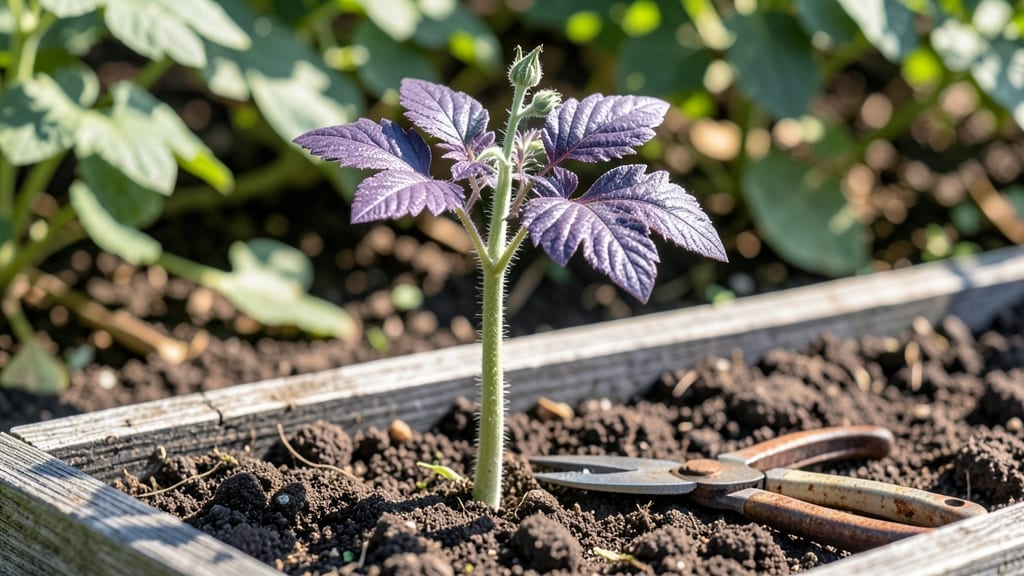
When tomato seedlings turn purple, it’s your plants’ SOS signal for stress—not a death sentence. 🌱 I’ve nursed dozens of purple-stemmed seedlings back to health, and the fix often comes down to three key adjustments: warmth, drainage, and fertilizer balance.
The purple hue usually appears on stems or undersides of leaves, signaling phosphorus deficiency or cold shock.
Cold stress is the most common culprit, especially in early spring starts. Seedlings need consistent 65–75°F soil temperatures; anything cooler triggers purple pigment as a survival response. Overwatering or compacted soil worsens the problem by suffocating roots.
Start by moving seedlings to a warmer spot—like a heated mat or sunny windowsill—and let the top inch of soil dry between waterings.
Adjusting fertilizer is the next step: purple stems often mean too much phosphorus or not enough nitrogen. Switch to a balanced 10-10-10 formula or dilute it to half-strength. Within 5–7 days, you should see greener stems and new growth.
The goal isn’t to eliminate the color immediately but to stabilize the plants so they can focus on roots and leaves instead of stress signals.
Prevention is simpler than repair: use black plastic mulch or seedling heat mats in cool climates, and avoid over-fertilizing early on. Purple seedlings can bounce back fully if caught early—just give them the right conditions, and they’ll shift from distress to vibrant green within weeks.
Here’s how to diagnose and fix it step by step.
Root Causes Of Purple Seedlings
Purple tomato seedlings aren’t just a quirky color—they’re a cry for help from your plants! While some varieties (like 'Purple Calabash' or 'Indigo Rose') naturally develop anthocyanins for pigment, most gardeners grow standard tomatoes expecting green leaves.
When seedlings turn purple, it’s usually a sign of stress. Let’s break down the top reasons this happens, so you can diagnose and fix the issue before it stunts your harvest.
Tomato seedlings are tropical babies—they hate the cold! When temperatures dip below 55°F (13°C), especially at night, they ramp up anthocyanin production as a protective sunscreen against UV damage. This pigment shields cells from light-induced stress, but it’s not a long-term solution.
Why it happens:
- Photosynthesis slows in cool temps, reducing chlorophyll (the green pigment) and letting purple anthocyanins dominate.
- Root growth stalls, limiting nutrient uptake, which further stresses the plant.
- Seedlings become leggy as they stretch toward warmth, weakening their structure.
Actionable fix:
- Use heat mats or grow lights to keep soil temps between 70–85°F (21–29°C).
- Hardening off seedlings gradually (exposing them to outdoor temps for 1–2 hours daily) helps them toughen up.
- If night temps drop below 50°F (10°C), cover seedlings with frost cloth or move them indoors temporarily.
Watering woes—whether too much or too little—can trigger that telltale purple hue. Tomato seedlings are sensitive to moisture fluctuations, and stress from drought or soggy roots forces them to produce anthocyanins as a survival tactic.
Why it happens:
- Underwatering causes osmotic stress, where cells lose turgor pressure. Anthocyanins act as antioxidants to protect damaged tissues.
- Overwatering leads to root rot and anaerobic conditions (lack of oxygen in soil), suffocating roots and triggering pigment production.
- Inconsistent watering (e.g., drying out then drowning) confuses the plant, causing erratic growth responses.
Actionable fix:
- Water deeply but infrequently—aim for 1 inch (2.5 cm) of moisture per week, adjusting for climate.
- Use well-draining soil (mix in perlite or vermiculite) to prevent waterlogging.
- Check soil moisture with your finger: If the top inch is dry, water; if it’s soggy, hold off.
- Mulch with straw or coconut coir to retain moisture and regulate soil temp.
Purple leaves often signal a nutritional imbalance, particularly with phosphorus, nitrogen, or magnesium. But sometimes, it’s the opposite—too much of a good thing (like salt buildup from fertilizers) can also cause discoloration.
Why it happens:
- Low phosphorus (a key nutrient for energy transfer) forces plants to rely on anthocyanins for cellular protection.
- Nitrogen deficiency (seen as pale yellow leaves) can pair with purple stems as the plant prioritizes survival over growth.
- Magnesium deficiency (often in older leaves) leads to interveinal chlorosis, but severe cases can cause purpling in younger leaves.
- Salt buildup (from over-fertilizing or poor-quality water) damages root cells, triggering pigment production.
Actionable fix:
- Test your soil with a DIY kit or send a sample to a lab for a full nutrient analysis.
- Feed seedlings with a balanced fertilizer (e.g., 5-5-5 or 10-10-10) at half-strength to avoid burning roots.
- Flush soil with plain water every 2–3 weeks to prevent salt accumulation.
- Add compost or worm castings for a slow-release nutrient boost without risking over-fertilization.
Moving seedlings—even carefully—can disrupt their delicate root systems. When roots are damaged during transplanting, the plant goes into defense mode, producing anthocyanins to protect stressed tissues.
Why it happens:
- Root pruning (cutting roots during transplant) reduces water and nutrient uptake, causing temporary shock.
- Compacted soil around roots restricts growth, leading to oxygen deprivation and purpling.
- Over-handling (e.g., roughing up roots when repotting) triggers cellular damage.
Actionable fix:
- Transplant on a cloudy day to reduce stress from direct sunlight.
- Use the "root dip" method: Soak roots in a fungicide solution (like 1 tsp hydrogen peroxide per quart of water) for 5 minutes before planting to prevent rot.
- Buried stems deeper (up to the first true leaves) encourages stronger root growth.
- Avoid over-potting—seedlings in too-large containers can develop weak root systems.
Not all purple is bad! Some tomato varieties are bred to develop anthocyanins as a natural trait, especially under certain conditions. If you’re growing heirlooms or purple-fruited types, the color might just be part of their charm.
Why it happens:
- Cold-hardy varieties (like 'Black Krim' or 'Cherokee Purple') produce more anthocyanins in cool weather as a built-in survival mechanism.
- High-light conditions can intensify purple hues in genetic predisposed plants.
- Young seedlings of some varieties may start purple before greening up as they mature.
Actionable fix:
- Research your variety—check seed packets or plant profiles to see if purpling is normal.
- Monitor growth patterns: If the plant greens up as it matures, it’s likely genetic. If purple persists with stunted growth, address environmental stressors.
- Provide ideal growing conditions (warm soil, consistent water) to encourage healthy chlorophyll production alongside anthocyanins.
Fungal infections, bacterial diseases, or pest damage can cause systemic stress, leading to purpling as a secondary symptom. While not always the primary issue, these problems often masquerade as nutrient deficiencies.
Why it happens:
- Fungal diseases (like early blight or damping off) attack roots or leaves, disrupting nutrient transport and causing discoloration.
- Aphids or spider mites suck sap from leaves, weakening the plant and triggering stress responses.
- Bacterial wilt (from Ralstonia solanacearum) clogs vascular tissues, reducing water flow and causing purpling in stems.
Actionable fix:
- Inspect leaves and stems for signs of pests (sticky residue, holes, webbing) or fungal spots.
- Spray with neem oil (1 tsp per quart of water) as a preventive fungicide and pest deterrent.
- Remove infected plants immediately to prevent spread.
- Improve airflow around seedlings by spacing them properly and avoiding overcrowding.
Not sure which cause applies? Run through this quick troubleshooting guide:
- Is your soil cold? → Use heat mats or move indoors.
- Are leaves crispy or wilting? → Check watering habits.
- Do roots look mushy or dry? → Adjust moisture or repot.
- Are older leaves yellowing? → Test for nitrogen/magnesium.
- See spots or pests? → Treat with fungicide or insecticidal soap.
- Is this a known purple variety? → Relax, it’s normal!
By addressing the root cause (pun intended), your seedlings will bounce back with vibrant green leaves—and you’ll be on your way to a bountiful, purple-free harvest! 🍅✨
Practical fixes for purple seedlings
If your tomato seedlings have turned an unexpected purple hue, don’t panic—this issue is often fixable with a few targeted adjustments. Below, we break down the most common causes and provide step-by-step solutions to restore healthy green growth.
Prevention tips are included to keep your seedlings thriving from start to finish!
If your seedlings are purple due to chilly temperatures, they need warmth and protection to bounce back. Here’s how:
- 🔥 Move to a warmer spot: Relocate seedlings to a sunny windowsill, greenhouse, or under grow lights (65–75°F is ideal). Avoid drafty areas like near doors or AC vents.
- 🌱 Use a heat mat: Place a seedling heat mat (set to 70–75°F) under trays to maintain consistent warmth. This mimics natural soil temperatures and speeds up recovery.
- 🧴 Cover with row fabric: If outdoors, drape lightweight row covers or plastic domes over seedlings to trap heat. Remove during the day to prevent overheating.
- ⏰ Gradual hardening: Once temperatures stabilize, acclimate seedlings to outdoor conditions over 7–10 days to prevent shock.
💡 Pro Tip: Purple from cold stress often fades within 3–5 days if warmth is restored. Monitor closely—if leaves stay purple or yellow, check for other issues like overwatering.
Excess moisture or soggy soil can cause purple tinges by stressing roots. Follow these steps to correct it:
- 🔪 Check the soil: Stick your finger 1 inch into the soil. If it’s damp or waterlogged, hold off on watering until the top inch feels dry.
- 🏺 Improve drainage: If using pots, ensure they have drainage holes. Add a layer of perlite or coarse sand to the bottom of containers to prevent compaction.
- 🌱 Repot if needed: If seedlings are in overly dense or water-retentive soil (like pure peat), transfer them to a well-draining potting mix (e.g., 60% peat, 30% perlite, 10% compost).
- 💧 Water wisely: Use the "bottom-watering" method: Place trays under pots and let seedlings soak up moisture from below. This reduces overwatering risks.
🌡️ Prevention Tip: Water seedlings in the morning so excess moisture evaporates by night. Avoid wetting leaves to prevent fungal issues.
Purple stems or leaves can signal a lack of key nutrients. Here’s how to diagnose and fix it:
| Symptom | Likely Deficiency | Solution |
|---|---|---|
| Purple stems + slow growth | Nitrogen (N) | Apply a balanced fertilizer (e.g., 10-10-10) or compost tea. Use ½ strength to avoid burning seedlings. |
| Purple edges on leaves | Phosphorus (P) | Use a phosphorus-rich fertilizer like bone meal (follow package rates) or switch to a 5-10-5 formula. |
| Purple veins + weak stems | Potassium (K) or Magnesium (Mg) | Add Epsom salt (1 tbsp per gallon of water) for magnesium or use a banana peel tea for potassium. |
✨ Pro Tip: Test your soil’s pH (ideal: 6.0–6.8 for tomatoes). Nutrients like phosphorus become unavailable in acidic or alkaline soil. Adjust with lime (to raise pH) or sulfur (to lower it).
If purple appears after transplanting, seedlings may be struggling with stress. Ease their transition with these steps:
- 🌱 Harden off properly: Gradually expose seedlings to outdoor conditions over 1–2 weeks. Start with 1–2 hours of sunlight daily, increasing time slowly.
- 💦 Water deeply after transplanting: Soak the root zone thoroughly to reduce shock. Use a rooting hormone (like mycorrhizal powder) to encourage faster establishment.
- 🌿 Shield from wind: Place a temporary windbreak (e.g., cardboard or a mesh screen) to protect delicate seedlings.
- 🌡️ Avoid hot days: Transplant on a cloudy day or in the late afternoon to prevent sunburn.
🎯 Prevention Tip: Wait until nighttime temperatures stay above 50°F before transplanting. Use black plastic mulch to warm the soil and retain moisture.
With these fixes, your tomato seedlings should regain their vibrant green color within a week or two. Keep an eye on environmental conditions, and your plants will reward you with a bountiful harvest! 🍅🌱
Frequently asked questions about purple tomato seedlings
Why do my tomato seedlings turn purple?
Purple stems or leaves usually signal stress from cold temperatures, nutrient deficiencies (like phosphorus or nitrogen), or inconsistent watering. Anthocyanins—purple pigments—act as a protective sunscreen when seedlings struggle to photosynthesize properly. Check soil temps (ideal: 65–75°F) and watering habits first.
Is purple always a problem in tomato seedlings?
Not necessarily! Some heirloom varieties (like 'Black Krim' or 'Indigo Rose') naturally develop purple hues, especially in cool weather. If your seedlings are otherwise healthy and growing, the color may just be genetic. Research your tomato variety to confirm.
How quickly can I fix purple seedlings?
With the right adjustments, you’ll often see improvement in 5–7 days. Start by moving seedlings to a warmer spot, adjusting watering, and using a balanced fertilizer. If the purple persists beyond two weeks, check for root issues or disease.
Can overwatering cause purple tomato seedlings?
Yes! Overwatering suffocates roots by creating anaerobic conditions (lack of oxygen), forcing seedlings to produce anthocyanins as a stress response. Let the top inch of soil dry between waterings and ensure pots have drainage holes.
What’s the best fertilizer for purple seedlings?
Use a balanced 10-10-10 fertilizer at half-strength to avoid burning delicate roots. For phosphorus-specific issues, try bone meal (follow package rates). Flush soil with plain water every 2–3 weeks to prevent salt buildup from fertilizers.