
Lawn
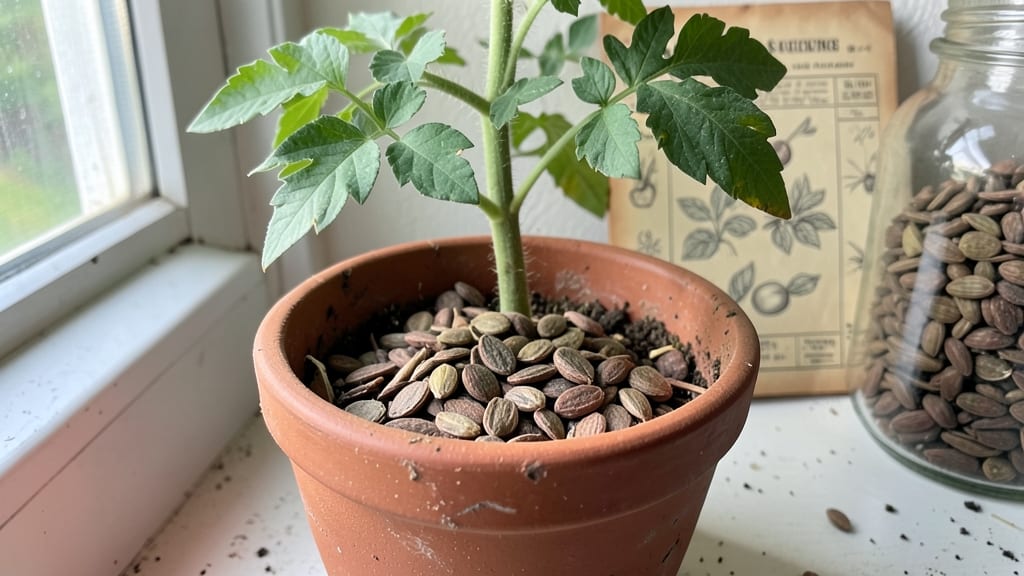
The oldest seed companies trace their origins to the 18th and 19th centuries, with trailblazers like W. Atlee Burpee & Co. (founded 1876) and Stokes Seeds (established 1865) shaping seed distribution and heirloom preservation for over a century and a half.
The 19th century was a golden age for seed businesses, as advancements in transportation and printing allowed companies to sell seeds through catalogs—something revolutionary at the time. 🌱 These early brands didn’t just sell seeds; they preserved genetic diversity by offering rare, open-pollinated varieties that modern agriculture often overlooks.
For example, Burpee introduced hybrid seeds that boosted yields, while Stokes focused on collecting and distributing botanical treasures from around the world.
What makes these companies stand out today is their commitment to maintaining traditional seed lines. Many still offer seeds that were popular over 100 years ago, ensuring gardeners can grow the same heirloom tomatoes, beans, and flowers that delighted earlier generations.
Their legacy isn’t just historical—it’s a living connection to agricultural roots.
💡 In This Article
- Historical Roots of Legacy Seed Companies
- How to Identify Authentic Heirloom Seeds from Oldest Brands
Historical roots of legacy seed companies
The 19th century transformed seed businesses from local trades into national enterprises. Before this era, seeds were primarily exchanged through barter or small-scale merchants. But the invention of the rotary printing press in 1843 and the expansion of the railroad network created the infrastructure for mass seed distribution.
Companies like Stokes Seeds, founded in 1865 in Buffalo, New York, capitalized on this by publishing one of the first seed catalogs—offering 500+ varieties to farmers and gardeners nationwide. This was revolutionary because it allowed rural customers to order specialized seeds without leaving home.
Post-Civil War America saw a surge in demand for agricultural innovation. W. Atlee Burpee & Co., established in 1876, became a pioneer by introducing hybrid seeds—a groundbreaking concept at the time.
Burpee’s experiments with cross-pollination led to varieties like the ‘Burpee’s Early Bush Bean’, which yielded 30% more pods per plant than traditional heirlooms. This scientific approach to seed development set Burpee apart, blending traditional gardening with modern agricultural techniques.
Meanwhile, Stokes Seeds focused on rare botanicals, importing seeds from global expeditions to preserve genetic diversity threatened by industrial farming.
The key to their longevity was adapting to changing consumer needs. In the 1880s, Burpee introduced pre-packaged seeds in paper envelopes—an innovation that reduced spoilage and made gardening accessible to urban households.
By 1900, their catalog had grown to 1,000+ varieties, including exotic flowers and vegetables like ‘Burpee’s Giant Pumpkin’, which weighed over 1,000 pounds. This blend of practicality and novelty kept customers engaged during economic fluctuations, from the Great Depression to modern sustainability movements.
What’s fascinating is how these companies preserved heirloom seeds while embracing innovation. Stokes, for example, maintained 19th-century seed banks containing varieties like ‘Black Krim’ tomatoes and ‘Crimson Glory’ beans, which were nearly lost to commercial agriculture.
Their catalogs often included historical notes, like planting dates from 1890s farm journals, creating a direct link between past and present gardeners. This dual focus—on both tradition and progress—ensured their survival through multiple agricultural revolutions.
Today, these legacy brands operate as bridges between history and modern gardening. Burpee, now part of W. Atlee Burpee Company, continues to offer seeds from its 1876 archives, while Stokes remains independent, specializing in organic and non-GMO heirlooms.
Their catalogs still feature vintage illustrations alongside modern growing tips, proving that the principles of 19th-century seed commerce remain relevant in the 21st century. 🌱
Their enduring success also stems from a deep understanding of seed science. Early seed companies recognized that genetic diversity was the foundation of resilient crops. Burpee’s hybrid work, for instance, wasn’t just about yield—it was about creating seeds that could adapt to regional climates.
Stokes’ focus on rare botanicals ensured that thousands of open-pollinated varieties survived, many of which now face extinction in industrial seed markets. This commitment to genetic preservation makes them invaluable resources for today’s gardeners seeking climate-resistant and flavor-rich produce.