Lawn
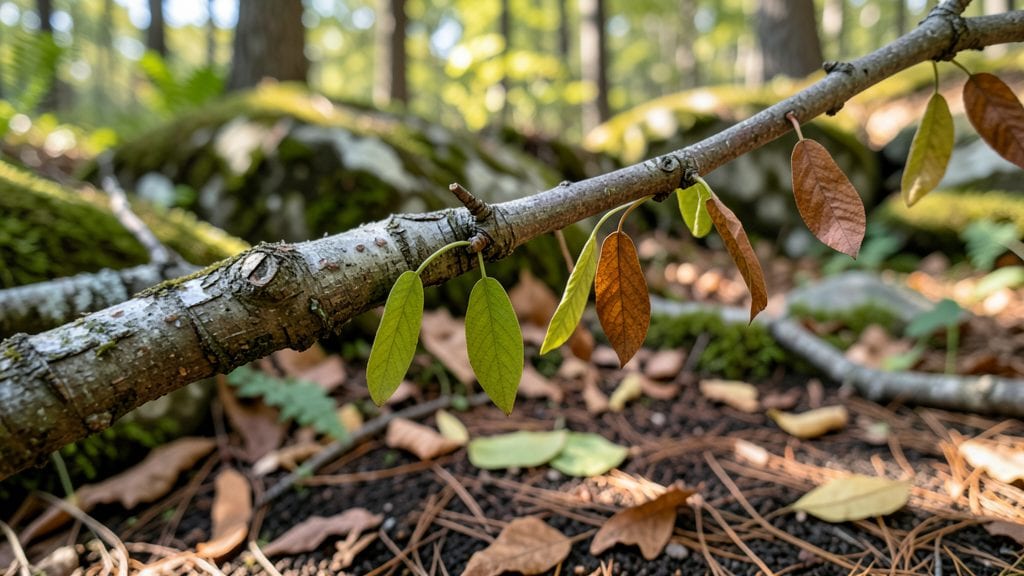
The identification of maple seeds begins with those iconic whirling "helicopters" that flutter to the ground every fall. 🌿 I've spent years collecting them in my backyard, and the key to telling sugar maples from red maples lies in the tiny details. of their wings and seed pods—details that make all the difference when you're trying to grow them.
The wings on sugar maple seeds are noticeably longer—about 1 to 1.5 inches—and form a wider V shape, while red maple wings are shorter and more compact, rarely exceeding an inch.
Even the seed pod itself gives clues: sugar maple seeds have a smoother, more elongated shape, while red maple seeds are slightly broader and flatter.
Once you learn these distinctions, you'll spot them everywhere—from your neighborhood trees to park benches. These seeds aren't just for planting; they're perfect for crafting or even starting your own maple saplings with the right care and patience.
Whether you're a budding arborist or just curious about the trees around you, these clues will transform your walks into a game of identification. Here's how to put that knowledge to use in your own backyard.
The Science Behind Seed Spread
Maple seeds—those iconic helicopter-shaped whirligigs—don’t just flutter randomly. Their design and dispersal are the result of a fascinating mix of biology, physics, and environmental adaptation. Understanding why maple seeds look and behave the way they do helps explain their role in forest ecosystems and how they’ve evolved to thrive.
Let’s break down the key factors driving their unique identification traits.
Maple seeds (technically samaras) are engineered for wind dispersal, a strategy that maximizes their chances of reaching new growth zones. Their signature wing-like structure isn’t just for show—it’s a hydrodynamic masterpiece. Here’s how it works:
- Lift and Stability: The elongated, papery "wing" creates lift by generating low-pressure air above and high-pressure air below, much like an airplane wing. The seed’s asymmetrical shape (one side slightly flatter than the other) ensures it spins as it falls, stabilizing its descent. This spin reduces turbulence and extends flight time, allowing seeds to travel hundreds of feet from the parent tree.
- Seed Weight and Balance: The actual seed (the nut) is heavy and dense, anchoring the wing to prevent it from flipping end-over-end. This balance keeps the wing horizontal, optimizing lift. Lighter seeds would tumble unpredictably, while heavier ones would drop too quickly—neither ideal for dispersal.
- Environmental Trade-Offs: Maple trees often grow in gaps or edges of forests, where wind is more prevalent. Their seeds exploit these wind corridors to colonize new areas, avoiding competition with the parent tree. This is why you’ll spot maple seedlings in open fields or along forest borders.
Pro Tip: 🌡️ The angle of the wing and the size of the seed vary by maple species (e.g., sugar maples vs. silver maples). For example, sugar maple wings are longer and narrower, designed for slower, steadier descent, while box elder maple wings are shorter and broader, allowing for quicker, shorter flights in denser woodlands.
Maple seeds don’t just fly—they’re also timed to germinate at the right moment. This precision is critical for survival, and it’s influenced by:
- Dormancy Mechanisms: Most maple seeds enter a period of dormancy after dispersal, requiring stratification (a cold, moist period) to break their dormancy. This ensures they germinate in spring or early summer, when soil temperatures and moisture levels are ideal for seedling growth. Without this delay, seeds might sprout too early and face frost damage.
- Light Requirements: Maple seeds are photoblastic, meaning they need light to germinate. Their wings don’t just aid flight—they also block soil contact until the seed lands in a suitable spot (e.g., a forest floor gap or disturbed soil). This adaptation reduces competition with established plants.
- Species-Specific Triggers: Some maples, like the red maple, germinate more readily in warmer conditions, while others, like the northern red oak’s acorns (often confused with maple seeds), require stricter cold stratification. This variation explains why you might see maple seedlings in urban areas or lawns—they’ve hitched a ride on wind currents and found hospitable microclimates.
Fun Fact: 🔍 Maple seeds can remain viable in the soil for up to 5 years under the right conditions, thanks to their hard seed coat. This "seed bank" strategy ensures that even if germination conditions aren’t perfect in year one, the tree has backup plans.
Maple seeds haven’t evolved in a vacuum—their shape, size, and dispersal methods are direct responses to ecological pressures. Here’s what’s driving their evolution:
- Competition with Other Trees: In dense forests, seeds must outcompete oaks, beeches, and pines for space. Maple’s wind dispersal allows it to bypass thick canopy layers, landing in sunlit gaps where seedlings can thrive. This "gap specialist" strategy is why maples dominate forest understories and edge habitats.
- Animal Predation Avoidance: Unlike acorns (a favorite of squirrels and jays), maple seeds are less palatable to most animals. Their fibrous wings are tough to chew, and the seeds themselves contain bitter compounds that deter herbivores. This reduces wasteful energy expenditure on seeds that might be eaten before germination.
- Climate Adaptations: Maple species in northern climates (e.g., sugar maples) produce seeds with thicker wings to handle stronger winds and colder temperatures, while southern maples (e.g., silver maples) have lighter, more flexible wings to adapt to warmer, more humid conditions. These differences are key to identifying maple species by seed.
Key Takeaway: ✨ The "helicopter" design isn’t just for fun—it’s a multi-purpose survival tool that balances dispersal, germination timing, and predator avoidance. When you’re identifying maple seeds, pay attention to wing shape, size, and seed attachment—these traits reveal the tree’s evolutionary strategies and habitat preferences.
While maple seeds are perfectly adapted to natural ecosystems, human activity has altered their dispersal patterns. Here’s how:
- Urban and Suburban Spread: Lawns, parks, and roadsides provide open wind corridors that maple seeds exploit. Urban maples (like Norway maples) often produce more seeds due to reduced competition and artificial watering, leading to "invasions" in gardens and green spaces.
- Climate Change Shifts: Warmer winters can disrupt dormancy cycles, causing seeds to germinate too early or fail to sprout at all. Meanwhile, longer growing seasons may expand the range of some maple species into new regions.
- Seed Mix-Ups in Nurseries: Many maple seeds sold for landscaping are hybrids or mislabeled, leading to unexpected seedling growth. For example, a silver maple seed might sprout in a yard planted for a sugar maple, resulting in a tree with different leaf shape, size, and growth habits.
Actionable Tip: 🌱 If you’re dealing with unwanted maple seedlings, remove them before they develop wings (typically in their first year). Once they start producing samaras, you’ll have a self-sustaining infestation on your hands!
Quick Fixes for Maple Seed Confusion
If you’re staring at a pile of winged seeds and wondering, "Is this a silver maple, sugar maple, or something else?"—don’t panic! With the right tools and techniques, maple seed identification becomes straightforward.
Below, we’ll break down solutions by common challenges, from leaf shape mismatches to seed wing variations, and even how to avoid future mix-ups.
Problem: You’ve got a seed with a long wing, but the leaf it fell from looks nothing like classic maple lobes.
Solutions:
- 📏 Compare with a Reference Guide Grab a maple seed identification chart (or use a trusted app like iNaturalist) and hold the seed and leaf side by side. Silver maples often have shorter, broader wings with asymmetrical lobes, while sugar maples have longer, narrower wings and symmetrical, pointed lobes.
- 🌿 Check the Stem & Buds If the leaf is still attached, examine the stem’s hairiness (silver maples are fuzzy) or the bud shape (sugar maples have smooth, oval buds). A quick Google Lens search of the leaf + seed combo can also help.
- 📸 Snap a Photo for Later If you’re still unsure, take a close-up of both the seed and leaf (include a coin for scale) and post it in gardening forums like r/whatsthisplant or Gardeners.com. Experts often spot details you might miss!
Problem: The wings are both long and papery, but you’re not sure if it’s a red maple, sugar maple, or boxelder.
Solutions:
- 📏 Measure the Wing Angle
- Sugar maple: Wings form a sharp V (45–60° angle).
- Red maple: Wings are wider at the base (60–90° angle).
- Boxelder: Wings are shorter and stiffer, often with a slightly curved tip.
- 🌱 Look for Seed Clusters
- Silver/red maples often drop seeds in small groups (2–5 together).
- Sugar maples usually release seeds one by one or in tight pairs.
- 🔬 Test the Seed’s Flexibility Gently bend the wing:
- Soft and bendy? Likely a red or silver maple.
- Stiffer with a slight snap? Could be a boxelder (though boxelders are rare in pure maple forests).
Problem: You keep misidentifying seeds because the trees in your area are hybrids or look-alikes.
Solutions:
- 📅 Track Seed Drop Seasons
- Silver maple: Late spring to early summer.
- Sugar maple: Late summer to early fall.
- Red maple: Early spring (often before leaves sprout!). Knowing when seeds appear helps narrow it down.
- 🌿 Observe the Tree’s Full Structure
- Bark texture: Silver maples have gray, scaly bark; sugar maples have deep furrows.
- Branch pattern: Red maples grow in a pyramid shape; sugar maples are rounder.
- 📝 Keep a Seed Journal Label seeds with location, date, and photos in a notebook or digital album. Over time, you’ll spot patterns (e.g., "All the seeds near the creek are silver maples").
If you’ve tried everything and the seed remains a mystery:
- 🌍 Check local tree databases (many cities have interactive maps of native species).
- 👨🔬 Visit a local arboretum—they often have labeled specimens.
- 📞 Call your county extension office—master gardeners can help with ID questions.
Pro Tip: 💡 Ever notice that maple seeds spiral as they fall? That’s no accident—it’s how they stabilize in flight! If you’re seeing seeds with tight, corkscrew spirals, it’s almost always a sugar maple. Looser spirals? Likely a red or silver maple.
With these tricks, you’ll go from "Is this a maple?" to "Ah, it’s a sugar maple—classic!" in no time. Happy identifying! 🌿✨
Frequently asked questions
How can I tell if a winged seed is a maple or something else?
True maple seeds (samaras) have two flat, papery wings that form a V-shape around a single seed. Look for the classic "helicopter" shape—non-maple seeds like ash or boxelder often have uneven wings or multiple seeds per wing. If the wings are stiff and curved, it might be a boxelder rather than a true maple.
Why do maple seeds spin as they fall?
The spinning motion is a stabilizing mechanism that extends flight time and distance. The asymmetrical wing design creates lift and drag, allowing seeds to travel hundreds of feet from the parent tree. Sugar maples spin more tightly, while red maples have a looser spiral—this difference helps with identification.
Can I grow a tree from a maple seed I found?
Yes, but success depends on the species and conditions. Sugar maple seeds need cold stratification (60 days in moist sand at 40°F) before planting. Red maple seeds germinate faster but may produce weaker seedlings. Start seeds in pots with well-draining soil and keep them in a shady, moist environment until spring.
What's the difference between silver maple and sugar maple seeds?
Silver maple seeds have shorter, broader wings (under 1 inch) with a wider angle, while sugar maple wings are longer (1-1.5 inches) and form a tighter V. Silver maple wings are also softer and more flexible, while sugar maple wings are stiffer. Check the leaf shape too—silver maples have asymmetrical lobes.
Are maple seeds safe to eat?
No, maple seeds are not edible—they contain bitter compounds that can cause stomach upset. However, the sap from maple trees (collected in early spring) is used to make maple syrup. Never confuse maple seeds with other nutritious seeds like walnuts or hickory nuts, which have completely different growth patterns.