Pruning
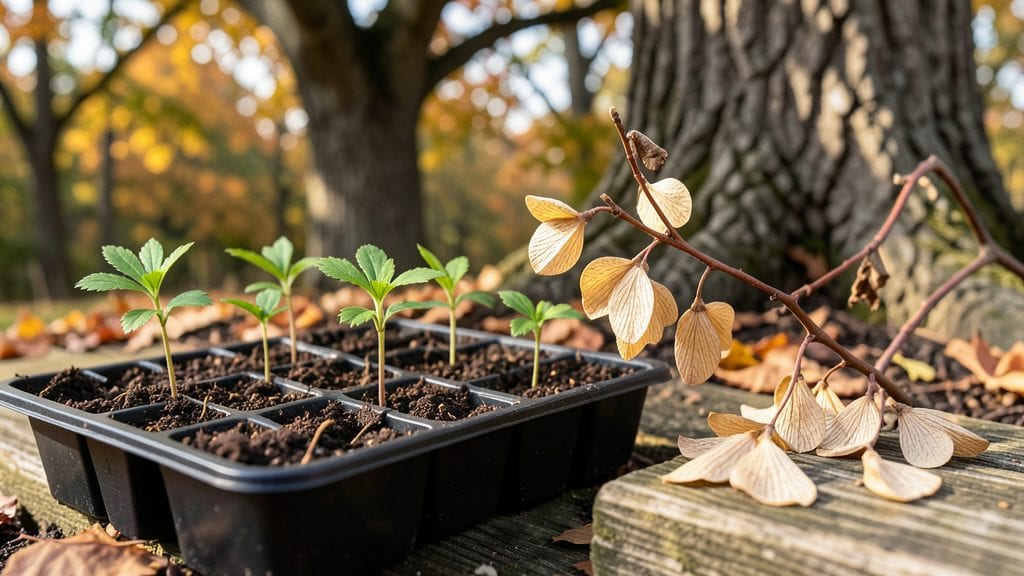
Identifying tree seeds correctly means the difference between growing a majestic oak or accidentally planting an invasive weed. 🌱 I’ve spent years collecting seeds from my backyard, and the first thing I learned is that size, shape, and texture hold all the clues you need—if you know where to look.
A single misstep can lead to years of regret, but once you master these visual cues, you’ll spot the right seeds like a pro.
The most common seeds you’ll encounter—like acorns, maple samaras, or pinecones—have distinct traits that set them apart. Acorns are round with a cap, maple seeds have those iconic helicopter wings, and pine seeds hide inside tough, scaly cones.
Even the texture matters: smooth acorns versus the fuzzy surface of cottonwood seeds. I keep a small notebook with sketches of what I find, which has saved me from planting the wrong species more times than I can count.
Once you’ve matched a seed to its tree, the next step is testing viability—because even the right seed won’t grow if it’s dead inside. A simple float test (drop it in water) or a cut test (check for a green embryo) works for most seeds.
Store viable ones in a cool, dry place, and you’ll have fresh planting material ready for next season. Just remember: some seeds, like those from yew or boxelder, are toxic—always double-check before handling.
This method works for backyard explorers, forest foragers, or anyone curious about what’s growing nearby. Start with the trees you already know, and soon you’ll recognize seeds on sight. The key is patience—some seeds need cold stratification, while others sprout in weeks.
Either way, you’ll end up with a garden full of surprises, all from seeds you identified yourself.
The Hidden Factors Confusing Seed ID
Identifying tree seeds can feel like solving a puzzle—especially when nature throws in a few curveballs. Misidentification often stems from overlooked biological traits, environmental influences, and human error.
Understanding these root causes helps you spot the red flags and avoid costly mistakes. Let’s break down why seeds trick even the sharpest eyes.
Some tree seeds are masterful imposters, evolving to resemble other species for survival. This phenomenon, called mimicry, can lead to confusion when seeds look nearly identical but belong to entirely different trees.
- Example: The winged samaras of maples and ashes share similar shapes, but their vein patterns and seed pod structures differ. A hasty glance might overlook these clues.
- Why it happens: Wind-dispersed seeds often mimic each other to maximize their chances of being carried away by gusts. Without close inspection, their subtle differences—like seed coat texture or internal seed arrangement—go unnoticed.
- Actionable fix: Use a hand lens (10x magnification) to examine fine details like hilum shape (the scar where the seed attaches to the fruit) or embryo orientation.
Seeds from the same species can look drastically different depending on when and where they’re collected. Climate, soil composition, and even the tree’s age play a role in seed development.
- Example: A white oak acorn from a drought-stricken region may have a thicker, harder shell than one from a lush forest. Similarly, pine cones from high-altitude trees often produce smaller seeds.
- Why it happens:
- Stress response: Trees under drought or poor soil conditions allocate more resources to seed survival structures (like thicker coats) rather than size.
- Genetic adaptation: Populations in different regions evolve slight variations to thrive locally (e.g., larger seeds in cold climates for better energy storage).
- Actionable fix:
- Cross-reference seeds with local botanical databases (e.g., USDA Plants Database or eFloras).
- Note the collection date—seeds mature at different rates, and green vs. brown hues can signal readiness.
Even experienced gardeners fall into traps when they assume a seed’s identity based on its surroundings or a partial match. This is especially true when dealing with hybrid trees or cultivated varieties.
- Common pitfalls:
- “It’s near a maple, so it must be a maple seed.” (False—many trees grow in the same habitats.)
- Ignoring seed arrangement on the branch (e.g., clustered vs. solitary seeds).
- Skipping the smell test—some seeds (like black walnut) have distinctive odors when crushed.
- Why it happens:
- Cognitive shortcuts: Our brains default to the most familiar match, even if it’s wrong.
- Lack of reference tools: Without a seed atlas or dissection practice, key features (like endosperm presence) are missed.
- Actionable fix:
- Use the “5-Step Verification” method:
- Observe the fruit: Is it a drupes (stone fruit), samara (winged), or capsule?
- Examine the seed: Shape, size, and hilum type.
- Check the tree’s leaves/bark: Cross-reference with a field guide.
- Test for germination: Soak seeds—some (like oak) need stratification (cold treatment).
- Consult experts: Post photos on forums like Gardening Know How or r/whatsthisplant.
- 💡 Pro Tip: Keep a seed journal with sketches of key features—this trains your eye to spot nuances over time.
- Use the “5-Step Verification” method:
When two tree species cross-pollinate, their offspring can produce hybrid seeds that defy classification. These “mongrels” of nature often exhibit traits from both parents, making ID a guessing game.
- Example: A red oak × white oak hybrid might have an acorn with intermediate shell thickness and leaf lobes that don’t match either parent.
- Why it happens:
- Unpredictable genetics: Hybrid seeds may skip generations of predictable traits, appearing as “mutants.”
- Environmental triggers: Stress (e.g., pollution, climate shifts) can increase hybridization rates.
- Actionable fix:
- Look for “in-between” traits (e.g., leaf shape, flower structure) and document them.
- Use DNA testing kits (like DNA Center) for ambiguous seeds—though it’s costly, it’s definitive.
- 🌡️ Warning: Hybrid seeds may not grow true to type. If planting, research their viability and cultivar stability.
By recognizing these common causes, you’ll sharpen your seed-sleuthing skills and avoid the frustration of mislabeled collections. Next, we’ll dive into tools and techniques to turn these challenges into confident identifications. 🕵️♂️🔬
Quick Fixes for Seed ID Confusion
Identifying tree seeds can feel like solving a puzzle—especially when similar-looking species throw you off. But with the right approach, you can turn guesswork into confidence. Below are practical solutions tailored to common challenges, from visual missteps to missing details, plus prevention tips to keep your plant-matching skills sharp.
If two seeds (e.g., maple vs. ash or oak vs. beech) seem identical at first glance, focus on these key differentiators:
🌿 Step 1: Compare Size and Shape - Use a ruler or caliper to measure width, length, and thickness.
Some seeds (like walnuts) are bulbous, while others (like hickory) are elongated. - Pro tip: 💡 Photograph seeds from multiple angles—side, top, and base—then compare them side by side on a phone or tablet.
📏 Step 2: Check Surface Texture
- Smooth seeds (e.g., sycamore) often belong to fast-growing trees, while ridged or warty seeds (e.g., buckeye) hint at slower-growing species.
- Rub your thumb over the seed’s surface—is it gritty (like a sweetgum ball) or silky (like a birch seed)?
🌱 Step 3: Look for Hidden Clues
- Winged seeds? If it has a papery extension (like a maple "helicopter"), note the angle and length of the wings—some species have asymmetrical wings (e.g., boxelder).
- Attached structures: Are there fleshy arils (e.g., yew berries) or spiky husks (e.g., acorns)?
These can be dead giveaways.
No field guide? Create one with these easy methods:
📸 Step 1: Snap and Sort
- Take close-up photos of seeds you do know (e.g., from a local nursery or park).
- Organize them in a digital album (like Google Photos) labeled by tree type.
- Pro tip: ✨ Add a "mystery seeds" folder—drag unknown seeds here until you ID them.
🌳 Step 2: Visit Local Arboretums or Parks
- Many cities have labeled trees with seed samples. Ask rangers or check park maps for native species trails.
- Bonus: Bring a small mesh bag to collect a few known seeds as "training samples."
💻 Step 3: Use Tech Tools
- Apps like LeafSnap or PictureThis can scan seeds (and leaves) for matches.
- Reddit communities (e.g., r/whatsthisbug or r/landscaping) often help with tricky IDs—post photos with your location and seed size for faster replies.
Need an answer now? Try these 5-minute tricks:
| Problem | Quick Fix | Prevention Tip |
|---|---|---|
| No time to measure? | Compare to a penny or quarter—estimate size. | Keep a seed-size cheat sheet handy. |
| Forgetting details? | Sketch the seed (even stick figures help!). | Use a voice memo to describe traits aloud. |
| Seeds are damaged? | Focus on undamaged sections (e.g., a cracked acorn’s cap still shows ridges). | Store seeds in a cool, dry container to prevent decay. |
| No internet access? | Carry a printed field guide (e.g., Peterson Field Guide to Trees). | Bookmark offline-friendly sites (like iNaturalist’s seed database). |
- Label seeds immediately after collection with a sharpie on a popsicle stick (write the date and location).
- Join a gardening group—local experts often share seed ID tips during cleanups or workshops.
- Plant a few "test trees" from known seeds to build muscle memory for future IDs.
Remember: Even experts misidentify seeds at first—practice makes perfect. Start with 5–10 common species in your area, then expand. Soon, you’ll spot clues others overlook!
Need a deeper dive? Check out our [Seed ID Cheat Sheet] (link placeholder) for regional comparisons.
Frequently asked questions
How do I tell the difference between an oak acorn and a hickory nut?
Oak acorns have a rounded cap that covers about 1/3 of the nut, while hickory nuts have a pointed, elongated cap that covers less. The shell is also smoother on oaks and often shiny brown, while hickory shells are thicker and ridged. Hold them side by side—oaks feel lighter due to their thinner shells.
Can I identify tree seeds without a microscope?
A hand lens (10x magnification) is enough for most seeds. Focus on shape, texture, and attached structures—like wings (maple) or husks (acorns). For tricky cases, compare seeds to a penny or quarter for size reference, and check online databases like the USDA Plants Database with photos.
What’s the fastest way to test if a seed is viable?
Try the float test: Drop seeds in water—if they sink, they’re likely viable (most hard-coated seeds like acorns will sink). For soft seeds (e.g., maple samaras), check for a green embryo when you cut one open. Store viable seeds in a cool, dry place (like a paper bag in the fridge) for up to 6 months.
Are there any tree seeds I should never plant?
Yes! Avoid planting seeds from invasive species like tree-of-heaven or autumn olive, which crowd out natives. Also, toxic seeds like those from yew, black cherry, or boxelder can harm pets or children. Always cross-reference with local wildlife agencies before planting unknown seeds.
How do I organize my seed collection?
Use small envelopes or mesh bags labeled with the tree name, collection date, and location. Store them in a cool, dry place (like a seed catalog box). For long-term storage, add a desiccant packet to prevent mold. Group seeds by type (e.g., "winged," "nut," "berry") to make identification easier later.