Pruning
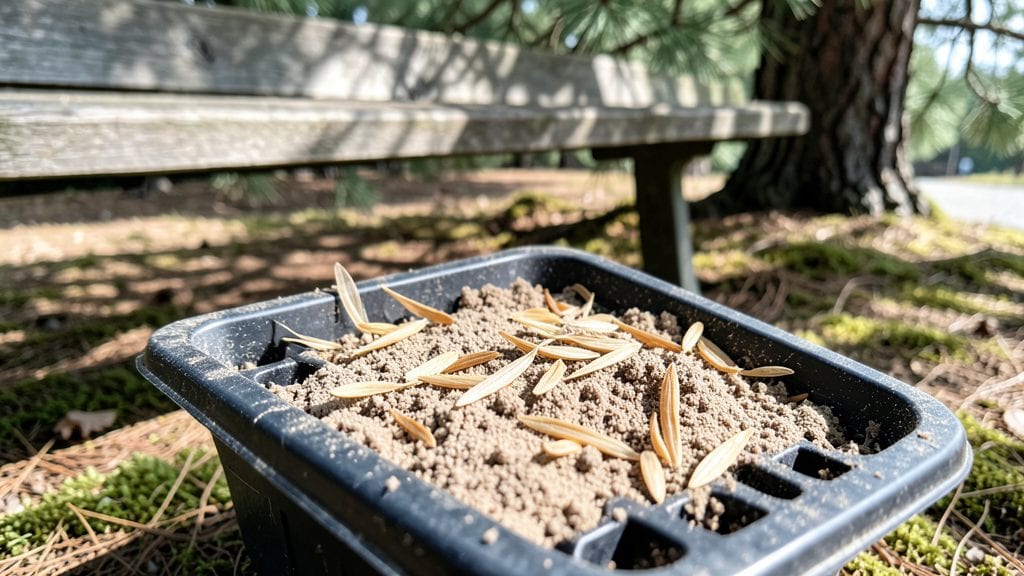
Growing evergreen trees from seed starts with the right approach to fast germination—because patience only works when you know the tricks. I’ve struggled with slow starts, but now I can get seedlings popping in as little as 7-14 days with the right prep.
The secret isn’t just soaking seeds; it’s matching species to your climate and mimicking their natural growing conditions.
First, you’ll need fresh seeds from a trusted source—old seeds germinate poorly—and a mix of sphagnum peat moss and perlite for drainage. Evergreens like pine, spruce, or fir need warmth (70-80°F) and moisture without drowning.
A clear plastic dome or zip-top bag creates a mini greenhouse, speeding up the process while keeping humidity high. Most seeds need light to germinate, so skip burying them deep.
Once those first needles appear, you’ll have tiny but tough seedlings ready for transplanting. They’ll grow slowly at first, but with consistent moisture and bright, indirect light, you’ll see real progress in 3-6 months.
The key is not rushing—evergreens take time, but the payoff is a tree that stays green year-round and outlives you.
This method works for backyard gardens, urban containers, or even as gifts—just adjust species to your zone. Whether you’re fixing a bare spot or starting a forest, these steps turn seeds into sturdy evergreens. Let’s get those seeds sprouting!
📚 In This Guide
- What you need
- Instructions
- Tips and common mistakes
- Wrapping up and next steps
What you need
- ● Evergreen tree seeds – Choose fast-germinating varieties like Pinus sylvestris (Scots pine) or Juniperus communis (common juniper). Buy 10–50 seeds (depending on your project scale).
- ● Seed-starting mix – 2–3 gallons of sterile, well-draining potting soil (avoid garden soil—it may contain pathogens). Look for a mix labeled for seedlings or conifers.
- ● Seed trays or small pots – 6–12 cell packs (3–4 inches deep) or 4–6 small pots (4–6 inches in diameter) with drainage holes.
- ● Plastic wrap or humidity dome – To maintain moisture during germination (cut to fit trays or buy a reusable dome).
- ● Spray bottle – For gentle watering (8–16 oz, with a fine mist nozzle).
- ● Grow lights or sunny windowsill – Evergreen seeds need 12–16 hours of light daily. A LED grow light (12–24 inches above seedlings) works best.
- ○ Heat mat (optional but helpful) – A seedling heat mat (set to 70–80°F) speeds up germination for cold-sensitive species.
- ● Tweezers or toothpick – For carefully placing tiny seeds in trays.
- ● Fine-mesh screen or paper towels – To pre-soak seeds (if needed) for 12–24 hours before planting.
- ● Fertilizer (low-dose) – A balanced liquid fertilizer (e.g., 5-5-5 or 10-10-10) diluted to ¼ strength for seedlings after 4–6 weeks.
- ● Labeling tags – Waterproof labels to track seed types and planting dates.
- ● Pruning shears or scissors – For trimming trays or pots if needed.
- ● Thermometer/hygrometer – To monitor soil temperature (60–75°F) and humidity (50–70%).
- ● Patience – Evergreen seeds can take 2–12 weeks to germinate, depending on the species!
- ● Consistent care – Keep soil moist but not soggy—overwatering is a common killer.
- ● Space for seedlings – If starting indoors, ensure you have room to transplant later (evergreens grow fast!).
Step-by-Step instructions for fast evergreen tree seed germination
Here's how I jumpstart even the slowest evergreen seeds—proven methods to break dormancy quickly.
Stratify Seeds to Simulate Winter Conditions
Most evergreen seeds need cold stratification to mimic natural winter cycles before they'll sprout. Place your seeds in a ziplock bag with a damp paper towel and seal it tightly. I store mine in my refrigerator's crisp drawer—the 34-40°F range is ideal—where they'll stay moist but not soggy for 4-12 weeks, depending on the species. Check weekly to ensure the towel stays damp; if it dries out, mist it lightly with water.
This cold treatment tricks the seed into thinking winter has passed, breaking its dormancy. Without stratification, many evergreens simply won't germinate—even if you plant them perfectly. I've seen pine seeds take three months in the fridge before they're ready, while spruces might only need six weeks. Patience here pays off in faster, stronger seedlings later.
Prepare Containers and Fast-Draining Soil Mix
Fill 4-inch deep containers with a sterile seed-starting mix blended with 20% perlite or coarse sand. Evergreen seeds rot quickly in dense soil, so drainage is critical. I use biodegradable pots for easy transplanting later. Moisten the mix until it's damp like a wrung-out sponge—no puddles, just even moisture throughout. Tap the containers gently to settle the soil without compacting it.
Sow seeds ¼ inch deep, spacing them 2 inches apart to avoid overcrowding. A single drop of water from a spray bottle ensures they stay in place without washing away. Label each pot with the seed type and stratification date—you'll forget which is which after weeks of waiting. I plant 4 seeds per pot to account for uneven germination rates, though not all may sprout.
Provide Warmth and Humidity for Germination
Move stratified seeds to a warm location—I use a seedling heat mat set to 70-75°F—and cover the containers with clear plastic wrap to trap humidity. Evergreen seeds often take 4-12 weeks to germinate, so consistency is key. Check daily for condensation on the plastic; if it fogs up, the humidity is perfect. If it stays dry, mist the soil lightly and reseal.
Light isn't critical at this stage—focus on warmth and moisture. I place my trays under a grow light on a 12-hour cycle, but natural room light works fine. Once you see tiny green tips breaking through the soil, remove the plastic immediately to prevent fungal growth. This is the moment you've been waiting for—germination can be slow, but it's worth the patience.
Transition to Bright Light and Gradual Hardening
When seedlings reach 2 inches tall, uncover them completely and move to a bright, indirect light spot. Evergreens need strong light to develop sturdy needles, but direct sun can scorch tender new growth. I use a south-facing window or LED grow lights kept 6 inches above the plants. Rotate containers weekly so they grow straight, not lopsided.
After 8-12 weeks, when seedlings have 4-6 needles, start hardening them off. Place them outside in partial shade for 1 hour daily, gradually increasing time over 2 weeks. This prepares them for outdoor conditions. Watch for yellowing needles—a sign of stress—and adjust shade or water as needed. Once they tolerate full sun without wilting, they're ready for their permanent home.
Tips & tricks for fast evergreen tree seed germination
These proven strategies will help you bypass the common pitfalls that slow down germination and get your evergreen seedlings growing reliably.
Temperature Precision in Step 1: The 34-40°F range in your refrigerator's crisp drawer is critical for successful stratification. I've found that the back of the fridge—where it's consistently coldest—works best if your crisp drawer isn't available. Use an appliance thermometer to verify the temperature if you're unsure. Remember, evergreen seeds need this cold period to break their natural dormancy, so don't rush it—even if some species only need six weeks, others like pine may require the full three months.
Soil Mix Consistency in Step 2: The 20% perlite or coarse sand amendment is non-negotiable for evergreen seeds. I've ruined batches using regular potting soil because it retains too much moisture, leading to rot. To test your mix, squeeze a handful—it should hold its shape but not drip water. If you're short on perlite, you can substitute coarse horticultural sand in equal parts, but avoid fine sand which compacts easily. The key is maintaining that fast-draining quality while still holding enough moisture for the seeds.
Humidity Management in Step 3: When you cover your containers with plastic wrap, you're creating a mini greenhouse effect that's essential for germination. The daily condensation check is your best indicator of proper humidity levels—if you see heavy fogging on the plastic, you're right on target. If the plastic stays dry, your environment isn't humid enough. I've had success using a small humidifier near the seed trays when my home tends to be dry, especially in winter months when heating systems reduce humidity levels.
Light Transition in Step 4: The move to bright, indirect light at the 2-inch stage is where many growers make mistakes. I recommend using a south-facing window if possible, but supplement with LED grow lights if natural light isn't sufficient. Position the lights 6 inches above the seedlings and keep them on a 12-hour cycle to mimic natural daylight. Watch for seedlings leaning toward the light source—this is your cue to rotate the containers weekly. The goal is to develop sturdy stems that can support themselves when you eventually transplant them outdoors.
Pro Tips for Evergreen Tree Seeds
- These proven strategies will help you bypass the common pitfalls that slow down germination and get your evergreen seedlings growing reliably.
- Temperature Precision in Step 1: The 34-40°F range in your refrigerator's crisp drawer is critical for successful stratification.
- Soil Mix Consistency in Step 2: The 20% perlite or coarse sand amendment is non-negotiable for evergreen seeds.
Frequently asked questions
Got questions about growing evergreen tree seeds? You’re not alone!
Here are answers to the most common queries to help you succeed with fast germination and reliable growth.
How long do evergreen tree seeds take to germinate?
Germination times vary by species, but most evergreen seeds (like pine or spruce) take 4 to 12 weeks. Some fast-growing varieties, such as dawn redwood (Metasequoia glyptostroboides), may sprout in 2–4 weeks with ideal conditions. Patience is key—keep soil moist and warm (65–75°F) to encourage speedy results.
Can I speed up germination for evergreen seeds?
Yes! Pre-treating seeds can help. Try stratification (cold-moist treatment) for 30–90 days or scarification (lightly sanding the seed coat) to mimic natural conditions. For some species, soaking in warm water for 24 hours before planting also boosts success. Pro tip: Research your specific evergreen—some need both methods!
What’s the best soil mix for evergreen tree seeds?
A well-draining, slightly acidic mix (pH 5.0–6.5) works best. Combine 50% peat moss or coconut coir, 30% perlite or sand, and 20% compost for optimal airflow and moisture retention. Avoid heavy clay soils, which can suffocate seeds. Bonus: Sterilize the mix with hydrogen peroxide (3%) to prevent fungal issues.
Why aren’t my evergreen seeds sprouting?
Common culprits include dormancy (seeds need stratification), poor soil (compacted or low in nutrients), or incorrect moisture (too dry or waterlogged). Check seed viability with a float test—discard seeds that sink (often non-viable). If using old seeds (<1 year), germination rates drop significantly. Try fresh seeds or adjust your method.
Can I grow evergreen trees from store-bought seeds?
Many nurseries and online retailers sell certified evergreen seeds (like pine, fir, or cedar) with high germination rates. Look for organic, non-GMO options if sustainability matters. Warning: Avoid wild-harvested seeds unless you’re certain they’re viable—some may require specialized care. Always verify the species for accurate growing tips!
How do I transplant seedlings without killing them?
Wait until seedlings have 2–3 true leaves and are at least 3–4 inches tall. Harden them off for 1–2 weeks by gradually exposing them to outdoor conditions. Use a small trowel to lift seedlings gently, keeping roots intact. Transplant in early spring or fall, water thoroughly, and mulch to retain moisture. Pro tip: Avoid transplant shock by keeping the root ball moist!
Wrapping up and next steps
Growing evergreen tree seeds can be a rewarding journey—with the right techniques, you’ll unlock fast germination and strong, healthy growth. Remember, patience and consistency are key: proper soil, ideal moisture, and gentle care will set the stage for success.
Whether you’re a seasoned gardener or just starting, every seed has the potential to become a majestic evergreen!
Ready to take the next step? Start small—try a few seeds in pots first, then expand as you gain confidence. Happy planting, and may your evergreen forest thrive! 🌱💚