Trees
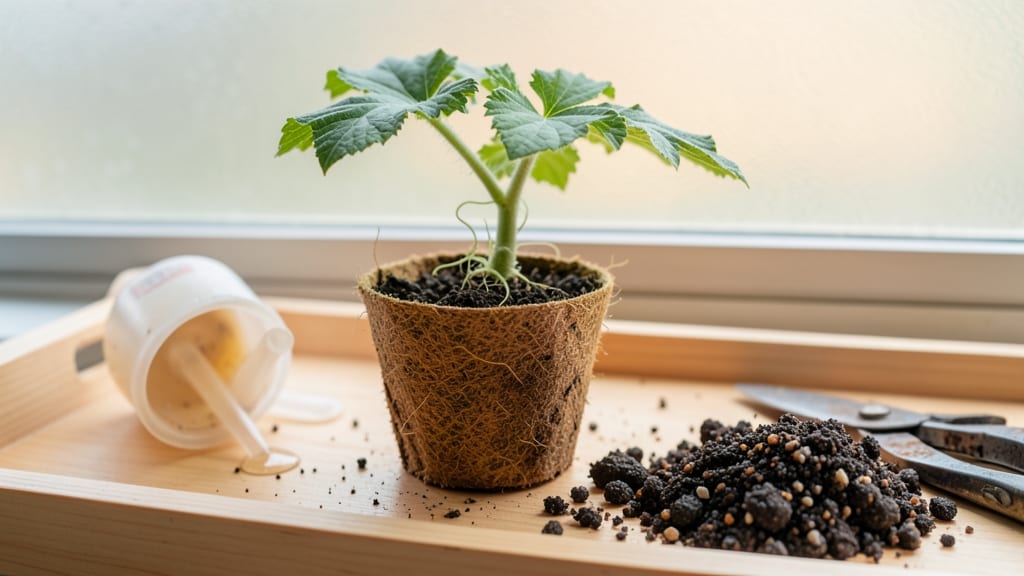
Mastering melon seedling identification early prevents costly mistakes—like yanking cucumbers instead of cantaloupes—so you can nurture the right plants from the start. leaves look almost identical.
The secret lies in counting leaves and examining the edges: melon seedlings develop their distinct lobed patterns after the second set of true leaves appear, while squash and cucumbers stay smoother or more rounded.
The first clue is the stem thickness—melon seedlings have a slightly sturdier base than cucumbers, which stay slender. Then watch the leaf veins: melon leaves develop a deeper network of ridges as they mature, while cucumber leaves remain flatter.
If you’re still unsure, pinch a leaf gently—melon leaves feel slightly waxier, almost like a tiny watermelon rind.
Once you’ve confirmed you’ve got melons, give them space to stretch. They’ll need at least 2 feet between plants by transplant time, and their vines will sprawl like tiny jungle gyms.
The payoff? Those first true leaves turn into huge, fragrant blooms by midsummer, and you’ll know exactly what’s growing before the first fruit even forms.
This works for cantaloupes, honeydews, and muskmelons alike—just adjust spacing based on variety. Now go check those seedlings before the weeds do!
What Triggers Misidentification
Identifying melon seedlings correctly can be tricky, especially when they’re young and their defining traits haven’t fully emerged. Missteps often stem from a mix of biological, environmental, and human factors. Understanding these causes helps gardeners and farmers make accurate distinctions early on—before it’s too late.
Below, we break down the most common culprits behind seedling mix-ups, with science-backed explanations to help you spot the red flags.
Seedlings are essentially "baby" plants, and their first leaves (called cotyledons) are often misleading. These initial leaves don’t resemble the true leaves that define a melon’s identity. For example:
- False resemblance: Cotyledons in melons (like cucurbits) can look similar across varieties—round, lobed, or even slightly heart-shaped—before the plant develops its first true leaves (which are serrated, jagged, or deeply lobed, depending on the species).
- Timing matters: True leaves typically appear 7–14 days after germination, but environmental stress (like cold snaps or poor soil) can delay this transition, leaving seedlings in a confusing "limbo" phase.
- Actionable fix: Wait until the third true leaf emerges before attempting identification. Use a magnifying glass to inspect leaf edges—watersmelon seedlings often have coarser teeth, while cantaloupe leaves may be more deeply lobed.
Extreme or inconsistent conditions can stunt growth, alter leaf shape, or even trigger false traits that mimic other varieties. Here’s how:
| Stressor | Effect on Seedlings | How to Mitigate |
|---|---|---|
| Temperature Fluctuations (e.g., frost or heatwaves) | Leaves may become puckered, curled, or discolored, resembling disease or a different variety. | Use row covers or seedling heat mats to maintain 70–85°F soil temps. |
| Poor Soil Drainage (waterlogged or compacted soil) | Stunted growth and yellowing cotyledons can make seedlings look weak or "off-type." | Amend soil with perlite or compost and ensure raised beds or containers have drainage holes. |
| Nutrient Deficiencies (e.g., low nitrogen or magnesium) | Leaves may develop irregular shapes or mottling, mimicking genetic anomalies. | Test soil pH (ideal: 6.0–6.8) and add balanced fertilizer (e.g., 10-10-10) at planting. |
If you’re growing multiple melon varieties in close proximity, unintentional hybridization can create seedlings that don’t match either parent. Here’s why it happens:
- Wind or insect pollinators: Bees and squash vine borers can transfer pollen between Cucumis melo (muskmelons) and Citrullus lanatus (watersmelons), producing hybrid seedlings with mixed traits (e.g., leaves that are neither deeply lobed nor smooth).
- Self-pollination quirks: Some melon varieties are parthenocarpic (produce fruit without pollination), but their seedlings may still exhibit unpredictable leaf patterns if grown from saved seed.
- Actionable fix:
- Isolate varieties by at least 500 feet or use pollination barriers (like fine mesh netting).
- Avoid saving seeds from hybrid or F1 melons—they won’t breed true.
- For heirloom varieties, hand-pollinate with a paintbrush to control crosses.
Even with healthy seedlings, misidentification often boils down to overlooking key details or relying on incomplete guides. Common pitfalls include:
- Focusing on cotyledons: As mentioned, these don’t reflect the adult plant’s traits. True leaf shape is the gold standard.
- Ignoring stem characteristics: Melon seedlings can vary in stem hairiness or color—watersmelons often have smooth, green stems, while some muskmelons may develop fine white hairs.
- Relying on color alone: Seedling leaves can range from deep green to yellowish-green due to light exposure. Compare multiple seedlings from the same batch to spot consistency.
- Pro tip: Take close-up photos of seedlings from different angles and compare them side-by-side with a melon variety database (e.g., Seed Savers Exchange or Burpee’s catalog).
By recognizing these underlying causes, you’ll be better equipped to diagnose and correct misidentifications before they derail your garden. Next, we’ll dive into proven methods to accurately distinguish melon seedlings at every growth stage.
Fixing Seedling Confusion Fast
Now that you understand the common causes behind misidentifying melon seedlings, let’s tackle practical fixes—tailored to each issue—so you can confidently distinguish your varieties by their true leaves. Prevention tips are woven in to keep future batches flawless!
---
When seedlings compete for space, their leaves distort, making identification nearly impossible. Here’s how to correct and prevent it:
✅ Fix It: - 🔥 Thin Them Out: Gently pull seedlings until each has at least 2–3 inches of space between them. Use scissors (not fingers) to avoid damaging roots. - 🍳 Repot Immediately: If seedlings are already crowded in trays, transplant them into individual pots (3–4 inches deep) with well-draining soil. - 👨🍳 Optimize Light: Move seedlings under grow lights (12–16 hours/day) to encourage healthy, uniform growth.
💡 Prevention Tips: - Start with the right spacing: Sow seeds 1 inch apart in trays, then thin to 2 inches once true leaves emerge. - Use deeper containers: 4–6 inch pots prevent root binding, which stunts leaf development. - Monitor growth daily: Check for overcrowding every 3–5 days—early action saves time!
---
Extreme heat, cold drafts, or insufficient light cause seedlings to develop abnormal, puckered, or yellowed leaves, mimicking disease or poor genetics.
✅ Fix It: - 🌡️ Adjust the Environment: - Too hot? Move seedlings to a shady, breezy spot (ideal temp: 65–75°F). - Too cold? Cover with a clear plastic dome or row cover to trap warmth. - Light deficiency? Supplement with LED grow lights (6–12 inches above seedlings). - 🥗 Revive Stressed Leaves: Mist seedlings with room-temperature water (avoid cold water) to rehydrate without shocking them.
💡 Prevention Tips: - Hardening off: Gradually expose seedlings to outdoor conditions 1–2 weeks before transplanting to toughen them up. - Consistent light: Rotate trays daily if using natural light to ensure even growth. - Avoid drafts: Keep seedlings away from AC vents, windows, or doors that create temperature swings.
---
Fungal infections (like downy mildew) or pests (such as aphids) can warp leaves, making them look like a different variety. Act fast to restore normal growth.
✅ Fix It: - 🔪 Remove Infested Seedlings: Discard heavily damaged plants to prevent spread. - 🍎 Treat Fungal Issues: - Spray with a 1:10 ratio of hydrogen peroxide to water (3% solution). - Apply copper fungicide (follow label rates) for severe cases. - 🐜 Combat Pests: - Aphids? Blast off with a strong spray of water or use neem oil spray (1 tsp neem oil + 1 quart water). - Spider mites? Wipe leaves with a soapy water cloth (1 tsp mild soap per gallon of water).
💡 Prevention Tips: - Sterilize tools: Clean pruners and trays with rubbing alcohol between uses. - Rotate crops: Avoid planting melons in the same spot year after year to break disease cycles. - Inspect daily: Check undersides of leaves every morning—early detection stops outbreaks.
---
If you’re still stumped, the issue might be misidentified seeds or hybrid traits masking true leaf shapes.
✅ Fix It: - 📊 Cross-Reference with Seed Packets: Compare your seedlings’ true leaves to photos or descriptions from the seed supplier. - 🔍 Consult a Melon Expert: Post clear photos in gardening forums (e.g., Reddit’s r/Gardening) or contact local extension offices for verification. - 🌱 Grow a Control: Plant one known variety (e.g., ‘Honeydew’) alongside your seedlings to compare leaf structures directly.
💡 Prevention Tips: - Buy from reputable sellers: Choose seeds from specialty nurseries (e.g., Baker Creek, Johnny’s Selected Seeds) with detailed variety descriptions. - Label everything: Use waterproof tags to track seed varieties and planting dates. - Save seeds wisely: If growing heirlooms, isolate plants by 50+ feet to prevent cross-pollination (which can alter leaf traits).
--- Final Pro Tip: 🎯 Document as you go! Snap photos of seedlings at the true leaf stage and compare them to trusted sources. Over time, you’ll train your eye to spot even subtle differences—like the lobed leaves of a cantaloupe vs. the smooth edges of a honeydew.
Happy growing!
Frequently asked questions
How can I tell the difference between melon and squash seedlings?
Look for the third true leaf—melon seedlings develop deeply lobed or jagged edges, while squash leaves are smoother with rounded lobes. Also check the stem: melons have a slightly thicker, waxier base compared to squash's slender stems.
Why do my melon seedlings look like cucumbers?
Cucumbers and melons share the same family, so their first cotyledons (seed leaves) can appear similar. The key difference is in the true leaves: melons develop serrated or deeply indented edges after 7-14 days, while cucumbers stay smoother with rounded tips.
Can I identify melon varieties just from seedlings?
Not reliably! While leaf shape gives clues (e.g., cantaloupes have more pronounced lobes than honeydews), true variety identification requires flower structure or fruit development. Focus on general melon traits until plants mature—then you can distinguish between types.
What should I do if I can't tell my seedlings apart?
Take close-up photos of the third true leaf and compare them to variety guides from seed companies. If still unsure, transplant all seedlings with at least 2 feet between plants—they'll reveal their true nature through vine growth and flower patterns later.
Do melon seedlings need special care during identification?
Keep seedlings in well-draining soil at 70-85°F and provide 12-16 hours of light daily. Avoid overcrowding—2-3 inches between plants prevents distorted growth that could mask identification traits. Healthy seedlings show their true characteristics more clearly.